Artificial intelligence has evolved rapidly over the past decade. From simple automation tools to advanced large language models, businesses have continuously adapted to leverage AI for efficiency and scale. But a new paradigm is emerging—one that goes beyond tools and assistants.
We are now entering the era of autonomous AI companies.
Instead of relying on isolated AI tools, organizations are beginning to build interconnected systems of AI agents that collaborate, execute tasks, and drive outcomes with minimal human intervention. This shift is not just incremental—it represents a fundamental transformation in how companies operate.
From AI Tools to AI Workforces
Traditional AI adoption focused on improving individual workflows: writing content, analyzing data, or optimizing ads. While effective, these tools still required human orchestration.
Now, the focus is shifting toward AI orchestration at scale—where multiple agents operate as a coordinated system.
Modern AI agents are capable of:
- Understanding context and objectives
- Executing multi-step workflows
- Communicating with other agents
- Learning from feedback loops
- Operating continuously without fatigue
This aligns with a broader industry trend toward agentic AI systems, where intelligent agents collaborate to solve complex tasks autonomously.
The implication is powerful: instead of hiring more employees or managing dozens of tools, businesses can deploy entire AI-driven teams.
What Is an AI Company (Built on Agents)?
An AI company, in this new sense, is not just a business that uses AI—it is a business run by AI agents.
Think of it as a digital organization:
- A CEO agent defining strategy
- A marketing agent running campaigns
- A developer agent shipping features
- A support agent handling customers
Each agent has a role, responsibilities, and access to tools—just like a human team.
These agents are connected through a shared system that:
- Tracks tasks
- Assigns responsibilities
- Monitors performance
- Optimizes outcomes
This approach transforms AI from a “toolbox” into an operating system for execution.
Why This Matters Now
Several technological shifts are enabling this transition:
1. Better Reasoning Models
Modern AI models can handle complex reasoning, long-term tasks, and structured workflows.
2. API-Driven Ecosystems
Agents can integrate with tools, data sources, and software stacks seamlessly.
3. Persistent Memory
AI systems can now retain context across sessions, enabling long-term planning and execution.
4. Real-Time Coordination
Multiple agents can operate simultaneously, communicating and updating shared objectives.
Together, these advancements unlock something new: continuous, autonomous execution.
The Operational Advantage
Companies adopting agent-based systems are seeing major benefits:
24/7 Execution
AI agents don’t sleep. Work continues around the clock, reducing cycle times dramatically.
Scalability Without Hiring
Instead of increasing headcount, businesses can scale by deploying more agents.
Cost Efficiency
AI-driven operations reduce labor costs while maintaining high output.
Consistency and Traceability
Every action, decision, and output can be logged, tracked, and analyzed.
Faster Experimentation
Agents can run tests, analyze results, and iterate faster than traditional teams.
This is particularly valuable in areas like marketing, development, and operations—where speed and iteration drive success.
The Shift From Dashboards to Living Systems
One of the most interesting developments in this space is the transition from static dashboards to dynamic, living systems.
Traditional software shows you what happened.
Agent-based systems show you:
- What is happening now
- What will happen next
- What actions are being taken automatically
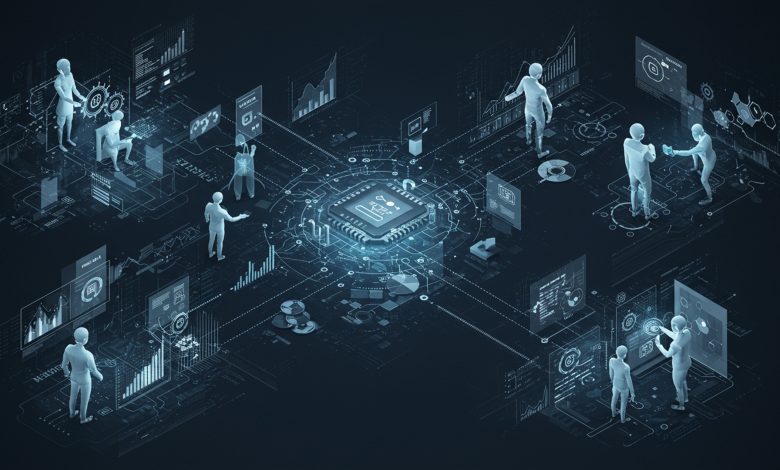
Instead of manually checking metrics, companies can observe a real-time “organism” of AI agents working toward goals.
This fundamentally changes how leaders interact with their organizations.
Real-World Use Cases
Agent-based AI companies are already being used across industries:
SaaS Startups
AI agents handle product development, bug fixing, and growth experiments.
Marketing Teams
Agents generate content, analyze SEO gaps, and optimize campaigns continuously.
Sales Organizations
AI SDRs qualify leads, follow up, and manage pipelines autonomously.
Content Agencies
Entire content pipelines—from research to publishing—are automated.
Venture Capital
Agents analyze deals, conduct due diligence, and monitor portfolios.
These are not theoretical use cases—they are being deployed today.
Introducing a New Operating System for AI Companies
 One platform pushing this vision forward is Cortex86 AI agent platform, which allows businesses to build fully operational AI companies in minutes.
Instead of configuring individual tools, users can:
- Deploy pre-built organizational templates
- Assign roles to AI agents (CEO, CMO, Developer, etc.)
- Set a mission or objective
- Watch agents execute tasks in real time
What makes this approach unique is its focus on structure and coordination.
Rather than isolated prompts, the system creates:
- A shared environment for all agents
- A ticket-based execution system
- Real-time activity tracking
- Budget control and analytics
This aligns closely with how real organizations operate—but powered entirely by AI.
Key Features Driving Adoption
Platforms like Cortex86 introduce several innovations that make agent-based systems practical:
Neural Network Visualization
A live view of agents interacting, executing tasks, and sharing information.
Automated Task Management
Every action is tracked as a ticket, ensuring accountability and traceability.
Scheduled Execution (“Heartbeats”)
Agents operate on defined schedules, checking tasks and reporting progress.
Collaborative Decision-Making
Teams of AI agents can process inputs (like meeting transcripts) and generate structured outputs.
Performance Analytics
Businesses can measure output, efficiency, and ROI across their AI workforce.
These features transform AI from a passive tool into an active workforce.
Challenges and Considerations
Despite the potential, there are still challenges:
Control and Oversight
Fully autonomous systems require guardrails to prevent unintended actions.
Data Security
AI agents accessing multiple systems must be carefully managed to avoid leaks.
Reliability
Ensuring consistent performance across complex workflows remains a technical challenge.
Organizational Adoption
Companies must rethink workflows and management structures to fully benefit.
However, these challenges are being actively addressed through improved governance, monitoring, and security frameworks.
The Future: AI-Native Organizations
Looking ahead, we can expect a new category of companies: AI-native organizations.
These businesses will:
- Be designed around AI agents from day one
- Operate with minimal human intervention
- Scale globally without traditional constraints
- Iterate faster than any human-led competitor
In this world, the role of humans shifts from execution to:
- Strategy
- Oversight
- Creativity
- Decision-making
AI becomes the execution layer.
Final Thoughts
We are at the beginning of a major shift in how work gets done.
The move from tools to autonomous systems—from assistants to full AI teams—will redefine productivity, scalability, and organizational design.
Platforms like Cortex86 are not just introducing new features—they are introducing a new model for building and running companies.
For businesses willing to adopt early, the advantage could be massive.
Because in the near future, the question won’t be:
“Are you using AI?”
It will be:
“How many AI agents are working for you right now?”