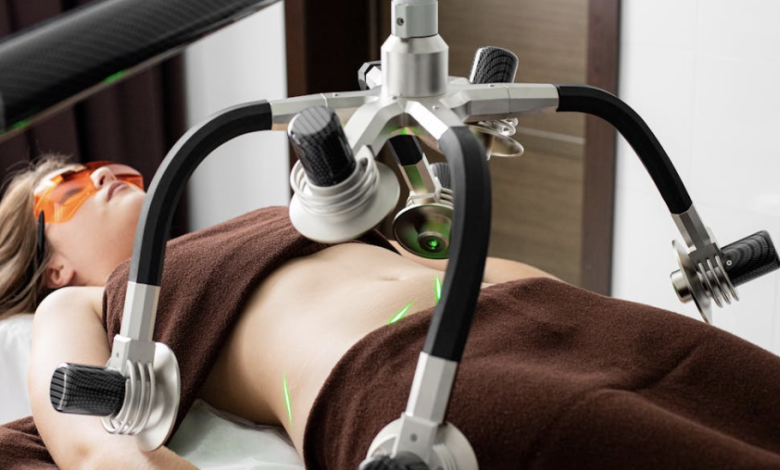
Body contouring has come a long way in the past decade. What used to rely heavily on a practitioner’s experience is now being shaped by tools that make planning and execution far more precise.
One of the biggest shifts behind this change is AI imaging in healthcare, which is helping clinicians approach treatments with a clearer, more data-driven understanding of each patient’s anatomy.
Manual Treatment Planning vs. AI-Driven Treatment Planning: From Intuition-Based Planning to Data-Informed Clinical Strategy
In the past, clinicians mainly depended on what they could see, feel, and interpret based on experience when planning treatments. Although this method could deliver good results, it relied heavily on subjective judgment, which made it difficult to maintain the same level of precision in every case.
Subtle variations in a patient’s body were not always fully captured, which made precise planning more difficult.
The integration of advanced imaging systems has enabled data-informed approaches to minimally invasive fat reduction, where treatment plans are tailored to each patient’s anatomy.
It’s important to note that while AI imaging offers more detailed insights and supports better planning, it does not replace clinical judgment. These tools are most effective when used alongside a practitioner’s experience, helping guide decisions rather than making them. The best outcomes often come from combining both approaches in a thoughtful way.
The Benefits of AI Imaging in Healthcare & How It’s Transforming Modern Body Contouring Procedures
Healthcare AI innovation is increasingly being integrated into clinical workflows across a range of specialties, including aesthetic medicine. While AI in healthcare is typically associated with diagnostics and simplifying administrative tasks, it is now also being used to support treatment planning through advanced imaging and data-driven analysis.
As it becomes more widely used in practice, it is influencing how procedures are approached at every stage, from the first assessment to the final result. Here are some of the ways AI imaging in healthcare is improving body contouring procedures:
- More Precise Contour Mapping Before Treatment: AI imaging allows clinicians to map out treatment areas in a more detailed way, including transitions between zones rather than just isolated fat pockets. This helps create smoother, more natural-looking contours instead of abrupt changes.
- Better Control Over Treatment Depth and Distribution: With clearer visual data, clinicians can plan how deeply and evenly fat reduction should be performed across different areas. This is especially important in procedures where uneven removal can affect overall symmetry.
- Improved Handling of Complex or Asymmetrical Cases: Subtle imbalances in the body are easier to identify and account for. This allows treatment plans to be adjusted more carefully, rather than applying the same approach to both sides.
- Stronger Alignment Between Planning and Execution: AI imaging helps bridge the gap between what is planned and what is actually performed. This reduces the likelihood of deviations during the procedure and supports more consistent outcomes.
Fat Reduction Procedures Enhanced by AI Imaging
Medical imaging technology is now part of a growing number of fat reduction procedures, supporting how different treatment methods are approached across both surgical and non-surgical options. Some of the procedures that are now incorporating this approach are:
1. Laser Liposuction
Laser liposuction introduces a layer that other procedures do not deal with in the same way: thermal interaction with tissue. It is not only about removing fat, but also about how heat affects surrounding areas, like skin tightening and tissue response. Because of that, planning needs to account for more than just volume.
Imaging becomes useful here because it helps identify where tissue characteristics may differ, especially in areas where skin may react unevenly. This allows for more deliberate adjustments in how the procedure is carried out, rather than treating all areas with the same intensity.
2. Minimally Invasive Liposuction
Unlike laser-based approaches, minimally invasive liposuction is more mechanical in how fat is removed. Techniques such as tumescent liposuction or power-assisted liposuction (PAL) use small cannulas to manually break up and extract fat. The challenge is not just accuracy, but control. Small differences in how fat is removed can affect how smooth or even the surface appears afterward.
Imaging helps by giving a better sense of how fat sits beneath the surface. Instead of relying only on what can be seen or felt, clinicians can think more carefully about depth and distribution. This makes it easier to avoid uneven areas and maintain a more consistent result.
3. Non-Surgical Body Contouring (e.g., CoolSculpting, RF-based treatments)
Non-surgical treatments like CoolSculpting, radiofrequency, and ultrasound-based fat reduction work on a different timeline compared to surgical procedures. Results do not appear immediately and tend to develop gradually over several weeks. Because of this, most of the important decisions happen before treatment begins, especially when determining which areas are most suitable.
Imaging supports this by creating a consistent reference point. As results gradually become visible, clinicians can evaluate changes more objectively and refine future sessions based on how the body responds, rather than repeating the same approach each time.
4. Body Contouring Combination Treatments
Combination treatments introduce a different level of complexity because they involve multiple techniques that may interact with each other. The challenge here is not just planning each procedure, but understanding how one treatment may affect the next. Imaging helps map out the sequence rather than just the individual steps.
This is particularly useful when treatments are spaced out over time. Instead of approaching each session independently, imaging allows clinicians to track how previous work has changed the area and adjust the next step accordingly.
Key Takeaways
The integration of AI imaging into body contouring is gradually reshaping expectations around how treatments are planned and delivered. It is not about introducing complexity, but about making the process more deliberate and easier to evaluate over time.
As these tools continue to develop, their value will depend on how well they are used alongside clinical expertise. When combined effectively, they offer a more consistent and thoughtful approach to body contouring that is likely to influence how procedures evolve in the years ahead.