With AYURA, he is creating a global care companion that compares options, reduces cost fear, and helps people stay out of dead ends.
Desidi Narsimha Reddy founded AYURA with certain realities in mind. Healthcare can break people without ever touching their bodies. It can drain savings, create debt, and trap families in decisions they do not fully understand. Many people delay care because the price feels impossible, and the process feels confusing.
Reddy wanted to do something. He grew up in a small town in India where quality healthcare and technology were limited, and he carried an early question into adulthood. Why should access depend on where you were born, what language you speak, or how comfortable you are with reading medical instructions?
“People should not fear medical bills,” Reddy says. “They should be able to make choices with their eyes open.”
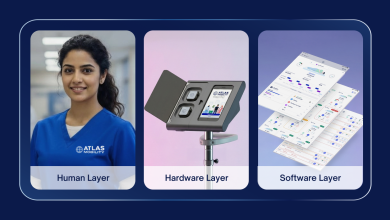
AYURA is designed to be a spoken, AI-supported healthcare ecosystem that provides early guidance, supports care coordination, and connects users with qualified doctors. The system supports multiple languages and is built for people who cannot rely on text-heavy apps, including users with literacy barriers.
A platform built around choice, not scarcity
Reddy describes one of AYURA’s core themes as borderless healthcare. He wants users to understand that high-quality treatment can be available worldwide at a fraction of the cost. He also wants the comparison to be easier and safer than the informal routes many families take today.
“A family should not feel trapped by local pricing,” he says. “Pricing should be information, not a threat.”
AYURA is designed for users across South Asia, including Sri Lanka, Bangladesh, Nepal, Pakistan, and India, plus other regions where access and literacy constraints remain common. The platform also has diaspora communities in mind and people in Western countries such as the United States, the United Kingdom, Canada, and Australia who explore international care options for procedures, diagnostics, and specialized treatment.
Reddy wants people to understand that this is not about bargain hunting. It is about survival and agency.
“When a bill can ruin a family, cost becomes a health problem,” he says.
Why he refuses to build for only literate users
Reddy has spent years studying how misinformation spreads when official systems are hard to navigate. In many communities, he says people still rely on middlemen and unverified healers because those options feel more reachable than a clinic.
His answer is to make credible guidance easier to access than rumor. AYURA is designed so users can describe symptoms out loud and receive a triage recommendation, then move toward licensed medical care with less confusion.
“Clarity is a form of protection,” he says. “It keeps people from making desperate decisions.”
The platform also aims to keep medical records on file and help with scheduling so care does not restart from scratch each time. Reddy believes continuity is one of the most underestimated drivers of better outcomes.
“One answer is not enough,” he says. “People need a thread they can follow.”
Research depth paired with enterprise delivery
Reddy’s credibility comes from a mix of research and large system execution. His publication record includes more than sixty papers spanning AI, healthcare analytics, cybersecurity research, and blockchain, cited over two hundred times by independent scholars. His work covers oncology diagnostics, privacy-centered machine learning, and identity security systems. Experts from national laboratories, medical institutions, and global healthcare organizations have recognized his contributions.
He also spent years leading enterprise technology initiatives across globally recognized brands, delivering work in data governance, analytics, and transformation. He has been involved with organizations that range from Turner Broadcasting to consumer brands and financial institutions.
Alongside his publications and enterprise work, Reddy has secured a patent portfolio that spans two Indian government patents and one UK government patent. The patent “Ai-Based Device For Measuring Nerve Damage Due To Diabetic Neuropathy” is a clear example of his approach. He is not only writing about healthcare AI. He is building inventions that aim to make diagnosis and decision-making more concrete for real patients.
His work is also visible in his writing. Reddy’s publication catalog includes nine books and over sixty articles, along with healthcare-focused research papers that expand on his technical work. His Google Scholar profile lists that research for anyone who wants to verify it.
Throughout his work, he treats privacy as a core constraint in healthcare, not a checkbox.
“People do not share openly if they feel exposed,” he says. “So privacy has to be built in from the beginning.”
A father’s perspective on autism and ADHD awareness
Reddy’s work also carries a deeply personal component. His older son received an autism diagnosis. He describes the earliest months as a fog of uncertainty, trying to learn what support can look like and where to start.
“Parents need information that does not shame them,” he says. “They need hope that is practical.”
He wants AYURA to support awareness and early guidance around autism and ADHD, helping families respond sooner and feel supported as they look for resources.
“When families understand sooner, children benefit sooner,” he says.
The ambition and the principle behind it
Reddy says he wants AYURA to become a healthcare infrastructure company that saves lives, reduces fear, and empowers families with clarity and confidence. He describes the long-term aim as building systems that outlive him and expand access to care across borders.
He sums up the mission with a line that functions like a standard.
“Healthcare should be a right, not a privilege,” Reddy says.
AYURA is his attempt to make that statement actionable for people who feel priced out, confused, or ignored. His focus is not on making healthcare feel futuristic. His focus is on making it feel possible.
To learn more about Desidi Narsimha Reddy, visit his LinkedIn.