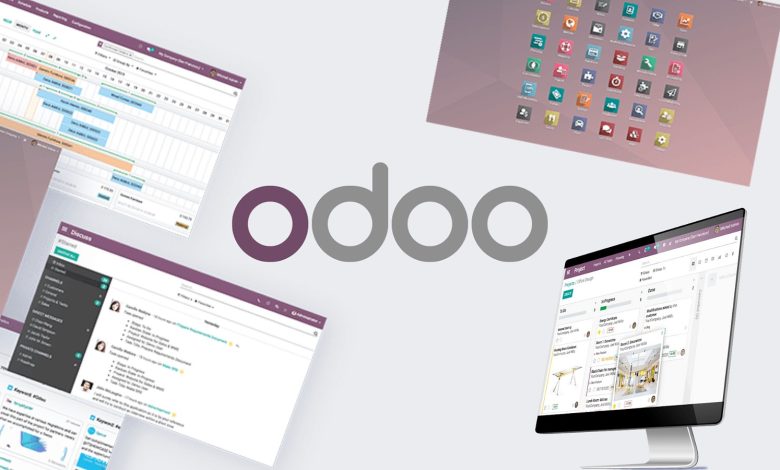
Agencies managing Odoo implementations for multiple clients face a fundamental infrastructure question: should you invest in specialized Odoo hosting for agencies, use a general managed platform, or build custom infrastructure yourself?
The answer depends on your agency’s technical capabilities, client portfolio size, and operational priorities. This guide examines three distinct approaches to help you evaluate which path makes sense for your specific situation.
Best Odoo Hosting Providers for Agencies
- Cloudpepper
- Cloudways
- Self-Managed Cloud Infrastructure
Understanding Agency Hosting Requirements
Unlike businesses running a single Odoo instance for their own operations, agencies need to provision, monitor, and maintain multiple independent deployments. Each client requires isolated environments, custom module configurations, and reliable performance that reflects on your agency’s reputation.
The hosting approach you choose determines how efficiently you can onboard new clients, how much time your team spends on infrastructure management, and whether costs scale predictably as your portfolio grows. For many agencies, hosting becomes either an operational strength or a persistent bottleneck.
1. Cloudpepper: Purpose-Built for Multi-Client Odoo Agency Operations
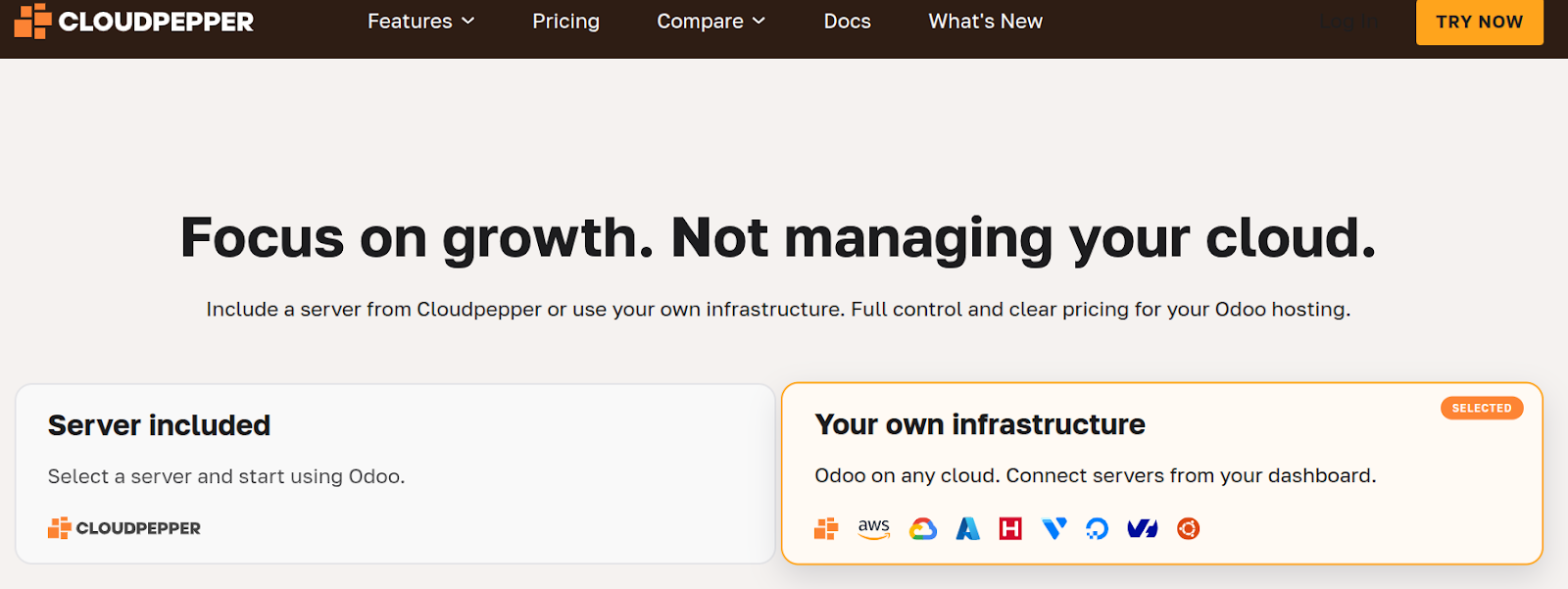
Cloudpepper specializes exclusively in Odoo hosting for agencies and implementation partners. The platform serves over 10,000 Odoo projects across 130+ countries, with infrastructure designed specifically around the workflows agencies need when managing multiple client deployments.
 Centralized Multi-Client Management:
The platform provides a unified dashboard showing all client deployments simultaneously. Instead of logging into separate accounts for each client, you can view system health, resource usage, and deployment status across your entire portfolio from one interface.
This centralization matters more as portfolios grow. Managing five clients with separate logins is manageable. Managing twenty becomes unwieldy without unified visibility.
Two Infrastructure Models:
Cloudpepper offers managed hosting where they provide and maintain servers, or a DevOps platform approach where you connect your own cloud infrastructure (AWS, DigitalOcean, Vultr) while they handle Odoo-specific configuration and management.
The DevOps model addresses vendor lock-in concerns directly. Your infrastructure and client data remain in your cloud account. If you discontinue Cloudpepper’s service, your servers continue running without migration requirements.
Unlimited Staging and Flat-Rate Scaling:
Pro and Agency plans include unlimited Odoo instances, servers, and staging environments for fixed monthly fees. This pricing structure converts hosting from variable cost into predictable overhead.
Every client can maintain multiple staging environments for testing custom modules before production deployment. The ability to test thoroughly without per-environment fees changes how confidently agencies can validate work.
Automated Git Deployment:
The platform connects to any Git repository and automatically deploys code changes when developers push commits. This automation works across your entire client portfolio, eliminating manual deployment procedures.
White-Label Capabilities:
Agency plans include complete white-label options. You can brand the client portal with your logo and domain, presenting hosting as your own service rather than a third-party provider.
Pricing:
- Base: $29/month (DevOps) or $41/month (Managed) – supports 2 servers
- Pro: $49/month (DevOps) or $61/month (Managed) – unlimited servers
- Agency: $250/month (DevOps) or $262/month (Managed) – unlimited servers with white-label
Considerations:
Cloudpepper’s specialization in Odoo means the platform works exceptionally well for agencies focused exclusively on Odoo implementations. If your agency manages diverse applications beyond Odoo, you might need additional hosting infrastructure for non-Odoo work.
The DevOps model requires basic familiarity with cloud provider interfaces to provision initial servers. This isn’t complicated, but agencies without any cloud experience face a small learning curve.
Best Fit:
Agencies managing five or more client Odoo deployments who want to minimize infrastructure management overhead while maintaining professional hosting capabilities. Particularly relevant for agencies where Odoo implementations represent core business focus.
2. Cloudways: Managed Cloud for Diverse Application Portfolios
Cloudways provides managed cloud hosting that supports WordPress, Magento, Laravel, and PHP applications alongside Odoo. The platform serves over 100,000 businesses and manages more than 570,000 websites across its infrastructure.
 Multi-Provider Flexibility:
Cloudways lets you deploy on infrastructure from DigitalOcean, AWS, Google Cloud, Linode, or Vultr. This provider choice gives you flexibility in pricing, geographic locations, and specific cloud features while maintaining consistent management across deployments.
For agencies managing clients with specific infrastructure requirements (data residency, particular cloud ecosystems), this flexibility accommodates diverse needs within one platform.
Application-Agnostic Management:
The platform handles server provisioning, security patching, backups, and monitoring for any PHP-based application. If your agency manages Odoo alongside WordPress sites, Magento stores, or custom Laravel applications, Cloudways provides unified management across different technologies.
This breadth works well for digital agencies offering multiple services where Odoo represents one capability among several.
Performance Optimization:
Cloudways includes built-in caching (Memcached, Varnish, Redis), SSD storage, and CDN integration. These optimization tools work automatically across applications without requiring manual configuration.
The platform provides staging environments and Git integration, though these features aren’t Odoo-specific like Cloudpepper’s implementation.
Team Collaboration:
Multi-user access with granular permissions lets you control which team members can access specific servers or applications. For agencies with distributed teams, this collaboration framework helps maintain operational boundaries.
Pricing:
Pay-as-you-go model based on server resources consumed. Basic servers start around $11/month. Production configurations typically run $30-80/month depending on specifications and cloud provider chosen.
Costs scale linearly with resource requirements. Each new server or resource upgrade increases monthly expenses proportionally.
Considerations:
Cloudways doesn’t provide Odoo-specific features like unlimited staging environments per client or multi-client Odoo dashboards. You’ll manage each client deployment separately within the general platform interface.
For agencies running large Odoo client portfolios (15-20+ deployments), the lack of Odoo-specific tooling creates operational friction. For agencies managing 3-5 Odoo clients alongside other applications, the general-purpose approach works reasonably well.
The platform focuses primarily on WordPress and e-commerce applications. While Odoo runs fine on Cloudways infrastructure, the platform isn’t optimized specifically for Odoo workloads like database-intensive ERP operations.
Best Fit:
Digital agencies offering multiple services (web development, e-commerce, Odoo implementations) who want unified managed hosting across diverse technologies. Works best for agencies where Odoo represents one service offering among several rather than exclusive focus.
3. Self-Managed Cloud Infrastructure: Maximum Control and Responsibility
Building Odoo hosting on AWS, Google Cloud, or a cheap VPS hosting provider like SSD Nodes directly gives you complete control over architecture, configuration, and optimization. You provision servers, install and configure Odoo, implement security measures, and maintain everything yourself.
Architectural Freedom:
Design infrastructure exactly how you want it. Implement custom caching strategies, build high-availability configurations with load balancing, separate database servers for performance optimization, or containerize deployments for client isolation.
This freedom matters for agencies serving clients with unusual technical requirements or for teams where infrastructure expertise represents competitive differentiation
Cost Control:
Base infrastructure costs can be quite low. Basic VPS instances start at $5-10/month. Even production-grade servers run $40-80/month for compute resources.
You’re paying only for raw infrastructure without managed service margins. For agencies with technical staff already handling infrastructure, this represents the lowest direct hosting cost.
Learning Investment:
The tradeoff is substantial technical overhead. You need expertise in Linux administration, PostgreSQL database management, security hardening, backup strategies, and Odoo deployment procedures.
Each client deployment requires manual setup, configuration, security implementation, and ongoing maintenance. Expect 5-15 hours monthly per server for experienced administrators handling security updates, monitoring, backup verification, and troubleshooting.
Multi-Client Complexity:
No unified multi-client dashboard exists. You’ll build automation yourself using scripts, configuration management tools, or custom dashboards. Managing 10-15 client deployments means operating your own hosting platform infrastructure.
Most agencies underestimate this operational complexity initially. Building reliable automation, monitoring, and backup systems across multiple clients represents significant engineering work.
Scaling Considerations:
As your client portfolio grows, infrastructure management demands grow proportionally. The time investment that made sense for 5 clients becomes unsustainable at 15-20 clients without dedicated DevOps staff.
Many agencies start with self-managed infrastructure, then migrate to managed platforms as portfolios expand beyond what manual management can handle efficiently.
Best Fit:
Agencies with dedicated DevOps capabilities where infrastructure management is already part of operational workflow. Works well for technical agencies differentiating through infrastructure expertise or serving clients with highly specialized requirements that managed platforms cannot accommodate.
Less suitable for agencies focused primarily on Odoo implementation and consulting where infrastructure management distracts from core business activities.
Comparing Operational Impact
| Cloudpepper | Cloudways | Self-Managed | |
|---|---|---|---|
| Setup Time per Client | 5 minutes | 15-30 minutes | 2-8 hours |
| Multi-Client Dashboard | Yes, Odoo-specific | General server management | Build yourself |
| Monthly Maintenance | Minimal | Low | 5-15 hrs per server |
| Odoo Optimization | Built-in | Manual | Manual |
| Cost Structure | Flat rate (Pro/Agency) | Per-server linear | Infrastructure only |
| Technical Expertise Required | Minimal | Low-Medium | High |
| Best Portfolio Size | 5-50+ clients | 3-10 diverse apps | Depends on DevOps staff |
Making the Decision
Consider Cloudpepper if:
Your agency focuses primarily on Odoo implementations and manages five or more client deployments. You want infrastructure to work reliably without consuming technical resources. Predictable costs matter more than minimizing absolute hosting expenses. The centralized multi-client management and Odoo-specific automation would eliminate operational friction you currently experience.
Consider Cloudways if:
Your agency manages diverse applications beyond Odoo and wants unified hosting across different technologies. Your Odoo client portfolio stays relatively small (under 10 deployments). You value managed infrastructure without needing Odoo-specific features. The general-purpose platform accommodates your mixed service offerings effectively.
Consider Self-Managed if:
Yzu have dedicated DevOps staff already handling infrastructure management. Infrastructure expertise differentiates your agency competitively. Your clients have highly specialized technical requirements that managed platforms cannot accommodate. You’re building hosting as a service offering itself, not just supporting implementation work.
The Practical Reality
Most agencies begin with whichever approach seems most affordable initially. Technically capable teams often start with self-managed infrastructure to minimize costs. Less technical agencies begin with managed platforms to avoid infrastructure complexity.
The decision usually shifts as agencies scale. Client portfolios that grow beyond 10-15 deployments strain manual infrastructure management. Agencies focused on implementation work find that infrastructure management distracts from revenue-generating activities.
There’s no universally correct answer. The right choice depends on your current capabilities, client portfolio trajectory, and where you want to invest operational resources. The options presented here represent different tradeoffs between control, convenience, cost, and specialization.
Evaluate based on your specific situation rather than seeking the objectively “best” platform. What works excellently for a 5-person implementation-focused agency would frustrate a 20-person team with diverse service offerings, and vice versa.