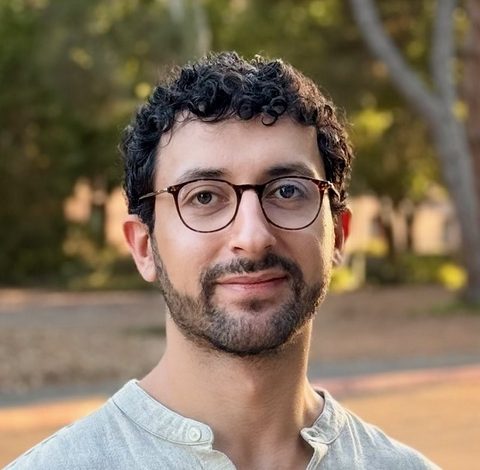
The physician and researcher is using AI to lift administrative burdens on clinics so clinicians can return to care.
A clinic can do everything right and still feel stuck. Patients wait. Phone lines stay busy. Staff spend the day chasing tasks that do not require clinical judgment. The doctor finishes the visit, then starts a second job that looks nothing like care. Dr. Ahmed Kerwan says he saw that pattern from every angle, first as someone who depended on the system, then as a doctor working inside it.
He arrived in London as a refugee with his parents in the mid 1990s, grew up in Camden Town, and attended state schools across the city. The NHS was part of his family’s first real sense of stability. “When you arrive in the UK with nothing, the NHS is the first thing that tells you: you belong here. No questions asked, no conditions. That stays with you.” he says.
Kerwan later studied at the University of Oxford and King’s College London, graduating with prizes and distinctions, and spent his summer researching public health across Brazil, Japan, and China.
He practiced as a doctor in the NHS while serving as an academic and Clinical Supervisor at the University of Cambridge. He published early papers on COVID-19 that have since been cited more than 33,000 times and informed government policy globally, work that earned him the Harold Ellis Prize.
“Medicine teaches you what pressure feels like,” he says. “It also teaches you what breaks first when a system is overloaded.”
The work quietly breaking the system
The problem Kerwan keeps returning to is not a lack of medical talent. It is how much time gets consumed by administrative operations.
He lists the tasks quickly. Phone calls. Insurance verification. Scheduling. Prescription refills. Patient communications. Billing.
“None of that is why clinicians train,” he says. “But it eats the day. It eats the energy. It changes how care feels for patients and for staff.”
He watched brilliant doctors spend more time pushing paperwork than speaking with patients. “You end up doing work that does not need your brain,” he says. “Then you have less of your brain left for the part that actually matters.”
He was later headhunted to become the first clinical hire at the NHS investment arm, sourcing and conducting due diligence on healthcare technology companies. He saw tools promising relief, but he kept seeing clinics forced to stitch systems together by hand.
“The solutions were often point tools,” he says. “One for scheduling, one for billing, one for messaging. Clinics were still stitching everything together by hand.”
Harvard, MIT, and a decision to build
Kerwan won both the Knox Fellowship and the Fulbright Scholarship to study at Harvard and MIT. He says the timing mattered because AI had finally caught up to the complexity of these workflows.
“I realized the technology had reached the moment where it could do the work end to end,” he says. “Not just assist, but actually handle the operations so clinicians can get back to patients.”
He founded Taxo, a company building agentic AI to automate the full spectrum of administrative operations that burden healthcare providers. Taxo was accepted into Y Combinator’s S24 batch and raised $5M from leading investors, including General Catalyst.
Kerwan is careful about what he means by agentic AI. He is not talking about a chatbot that answers a question and stops. He is talking about software that can own a workflow from start to finish, with the checks and reliability healthcare requires.
“A lot of healthcare operations are predictable,” he says. “They are repetitive. They have rules. They require judgment in the sense of following constraints, not clinical judgment. That is the gap we are closing.”
Why he calls it an ethical issue
Kerwan frames this work as more than convenience. He points to what gets lost when clinicians are buried in administrative work.
“Somewhere right now, a patient is being harmed by paperwork,” he says. “Not by a misdiagnosis or a surgical error, but by a phone call never returned, an insurance authorization that expired in a queue, a referral sitting unprocessed because the front desk is underwater. The harm is invisible and undramatic, but it is real, it is cumulative, and it is happening at a scale that should trouble every healthcare professional alive”
“People treat admin burden like a normal tax,” he says. “I do not accept that. If a task never required a human in the first place, asking humans to do it at scale is not neutral. It is harmful.”
He also rejects the idea that automation is about replacing clinicians. He describes it as protecting clinical attention.
“The clinician should be doing the part no machine can do,” he says. “Seeing patterns in a patient, building trust, making decisions where the stakes are human. The rest should not be taking their day.”
What he is trying to build next
Kerwan says his long-term goal is to make Taxo the default platform for healthcare operations globally. Taxo is already live across the US, the UK, and Saudi Arabia, he says.
He returns to the same personal through line when he explains why it matters. He has lived on both sides of an overstretched health system, as a refugee relying on it and as a doctor stretched thin within it.
“That distance is what keeps me focused,” he says. “I know what it feels like when healthcare is hard to access. I also know what it feels like when the people delivering care are depleted. We can change that.”
For more information, visit taxo.ai.