Companies have been using chatbots and text-based assistants for years, but internal adoption has been stubbornly low. Employees ignore them, and customers often avoid them altogether. The issue is no longer about whether AI works – it clearly does. The real challenge is to understand why people are reluctant to use it. Increasingly, organizations are looking to solutions provided by an artificial intelligence agency to fill this gap and rethink the way humans interact with AI in business environments.
This shift underscores a more profound understanding, which is that technology is not all that is required. Due to the need to transform AI into a proactive agent, rather than a passive one applied in everyday processes, businesses are starting to consider more interesting, human-facing interfaces, with partners like an artificial intelligence agency.
The engagement gap in enterprise AI
Recent studies in the workplace indicate that despite heavy investment in AI tools, adoption rates are low. Many employees return to old ways, and customers prefer human interaction over automated systems. The crux of the matter is user experience and trust.
Text-based interfaces give the feeling of distance. Humans are hardwired to respond to presence, faces and conversation. When these things are absent, engagement levels are greatly reduced. AI systems that do not mimic even a semblance of human interaction leave a huge amount of value untapped.
What “Embodied AI” Actually Means for Business
Embodied AI is AI systems which are delivered via a visual or physical form, often in the form of avatars or virtual agents. These systems go beyond mere text or voice responses with their inclusion of visual presence, gestures and interactive behaviors.
There is a clear spectrum:
Text chatbot Voice assistant 3D generative AI avatar
As we move along this spectrum, capabilities grow. Embodied AI agents can handle multiple types of input (text, voice, visuals), can be made to look like a brand, can play certain organizational roles, and can be integrated with internal databases and enterprise systems.
These attributes open up more natural interactions and therefore, AI does not seem like a tool with an opportunity to operate but rather a partner.
Three enterprise use cases driving real adoption
- Employee Onboarding & Training
Embodied AI agents can serve as interactive tutors, taking new employees through the onboarding process. They personalize learning, answer questions in real-time and dramatically reduce time-to-competency. This is a scalable approach, which guarantees consistent training across large organizations.
- Internal Knowledge Management
Instead of searching through documents or intranet systems, employees can have an interaction with an AI agent that functions as a smart knowledge layer. Connected to ERPs, FAQs and internal documentation, the agent provides precise answers instantly, improving efficiency and reducing frustration.
- Customer-Facing Interactions
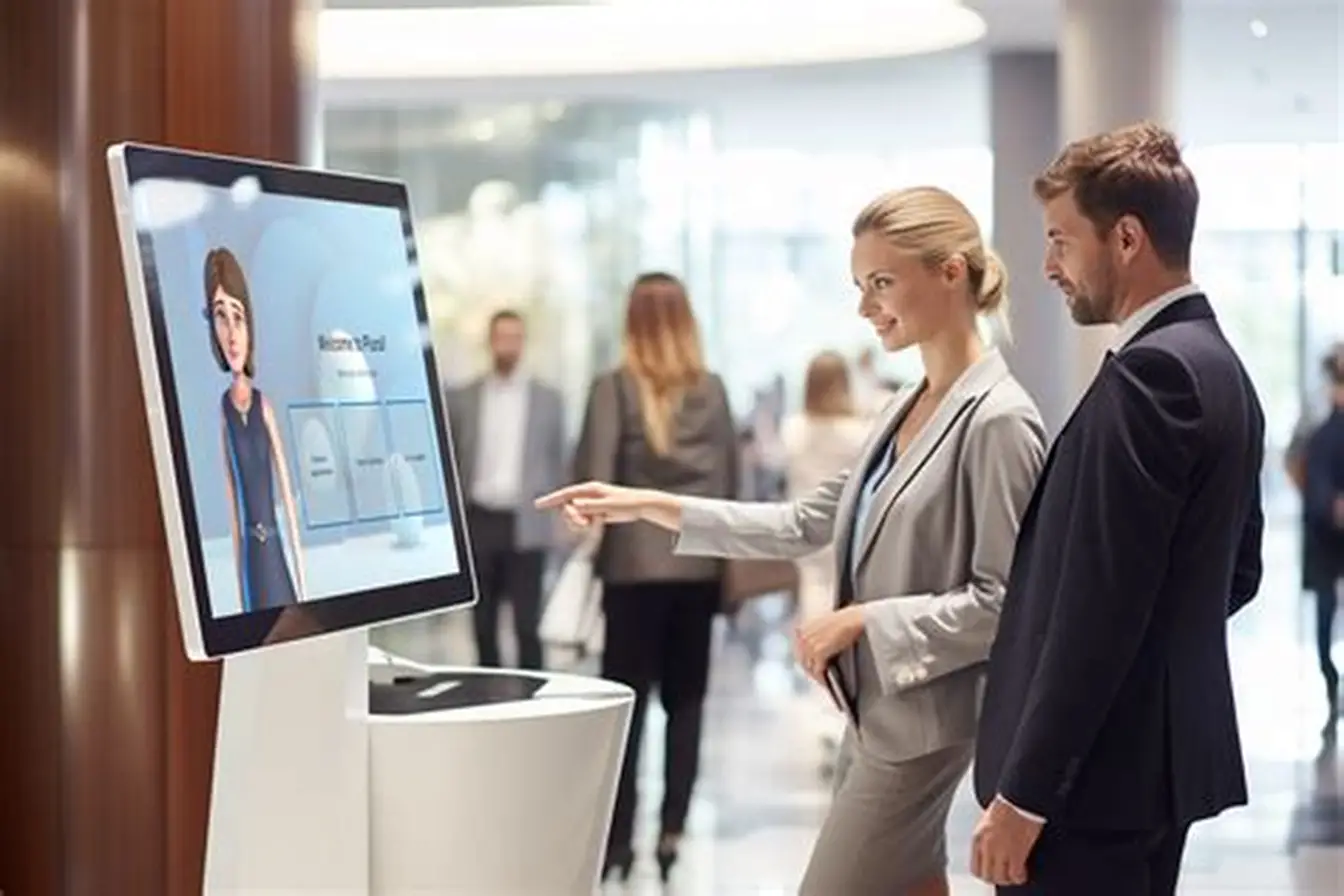
In industries such as retail, tourism, and banking, embodied AI avatars are used as very engaging first points of contact. They offer personalized help, provide guidance on services and improve the overall customer experience.
A notable example is from Imascono, a specialist in enterprise grade implementations. Their work with projects such as VEGA, Cervantes AI and the Rafa Nadal Academy highlights the impact that embodied AI can have on industries, and how it is able to deliver real-world impact to them.
The technical requirements companies underestimate
The concept of embodied AI is seductive, but there is more to achieving it than a handsome avatar. One of the problems that companies misjudge is the technical complexity.
Key requirements include:
- Integration with internal systems such as ERPs and databases
- A proprietary content management system (CMS) for managing interactions
- Cross-platform distribution across Environment of being on the web, VR, and AR.
- Advanced analytics to monitor usage and engagement and performance
Generic off-the-shelf solutions are seldom able to meet these needs. Rather, organizations will gain through working with specialist providers, who will be in a position to tailor-made solutions to meet their infrastructure and objectives.
What to look for in an enterprise AI Avatar partner?
 hoosing the right partner is critical to long-term success. Businesses should consider providers based on a number of key criteria:
- Combined expertise in artificial intelligence and extended reality (XR)
- Powerful 3D development capabilities
- Ability to integrate proprietary and enterprise data sources
- High level of agent customization
- Multiple platform Support (web, mobile, VR, AR)
The right partner will not only provide technology but also make sure that it is aligned with user behavior and business goals.
Conclusion
Enterprise AI that actually gets used is AI that people want to engage with. The future is in the combination of advanced technical capabilities with human-like interaction. Embodied AI agents are a powerful solution to the engagement problem, revolutionizing the way employees learn, access knowledge and interact with customers.
Firms that adopt this sooner will have a huge competitive edge and this will happen by collaborating with an artificial intelligence agency. The benefits will multiply with time and establish the new standard of AI adoption by enterprises as the benefits will be improved productivity as well as enhanced knowledge retention and enhanced customer experiences.