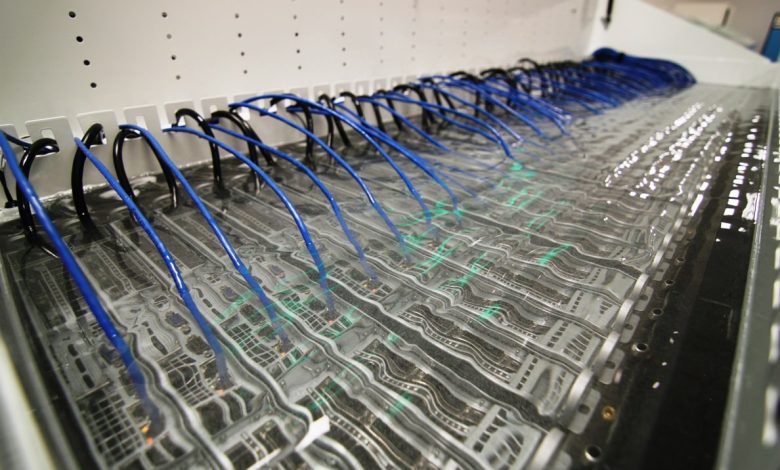
When artificial intelligence workloads began demanding rack densities that conventional air cooling could no longer support, the data center industry faced an unexpected obstacle. The technology to cool chips directly with liquid existed. The willingness to deploy it existed. What did not exist was any established path to get it permitted, certified, and accepted by the regulatory bodies that govern building systems across the United States. That gap between engineering possibility and regulatory reality is where Sabhya Katia built something the industry did not yet have.
A Problem No Standard Could Solve
For decades, data center cooling meant air: cold air delivered to racks, hot air returned to cooling units, systems optimized around that single assumption. Every major building energy code, ASHRAE 90.1, the International Energy Conservation Code, and California’s Title 24, was written with air-based systems as the baseline. Permitting authorities reviewing a building application knew what to look for, what questions to ask, and what documentation to request, because the technology had not fundamentally changed.
Chip-level liquid cooling changed that entirely. Closed liquid loops running directly across processors operate under different physical principles, different containment requirements, and different failure modes than anything the permit binders had been designed to evaluate. When Katia, a Senior Building Analyst at Stantec, was tasked with leading the energy and compliance work on a liquid-cooled mission-critical deployment, he discovered that no standard approach existed for what he was being asked to do. No template. No precedent in the permitting record. No established narrative for convincing an authority having jurisdiction that a closed liquid system running through a data hall was safe, efficient, and code-compliant.
“The codes were written for air,” Katia explains. “Everything, the safety provisions, the containment requirements, the documentation expectations, assumed air was the medium. We had to demonstrate equivalence against criteria that weren’t designed with us in mind.”
Building the Framework From First Principles
Rather than solve the permitting problem for the single project in front of him and move on, Katia built a replicable framework: a structured methodology that could be applied to any liquid-cooled project, in any jurisdiction, against any code variant. The framework had three interlocking components.
The first was a documentation architecture for authorities having jurisdiction. Katia developed an AHJ compliance binder specifically designed for closed liquid loop systems, pairing manufacturer pressure and containment data with safety analyses that demonstrated the system’s behavior under both normal operation and fault conditions. The binder provided reviewers with component-level evidence they could evaluate against code criteria, and a consistent narrative explaining why a system that looked unfamiliar was, in fact, safer and more efficient than the air-cooled baseline it replaced.
The second was an energy model translation methodology. Standard modeling software, IES-VE, EnergyPlus, CBECC, was built around air-based cooling assumptions and could not natively represent the temperature and load-based performance characteristics of chip-level liquid systems. Katia developed his own approach to translate vendor component data into system-level performance predictions that the standard tools could process and that regulators could verify, modeling all 8,760 hours of the year across changing temperature, wind, and humidity conditions.
The third was a USGBC documentation pathway. LEED BD+C certification for liquid-cooled facilities required producing documentation that the Green Business Certification Inc. could evaluate against its criteria, documentation that, again, had no established template for chip-level systems. Katia structured the submission to demonstrate performance improvement against the ASHRAE baseline in terms that USGBC reviewers could assess.
Regulatory Acceptance as the Proof of Concept
The framework’s validity was established not by internal review but by regulatory acceptance. The project achieved LEED BD+C: Core & Shell certification, with the certification date of July 19, 2025, confirming that the USGBC documentation approach worked. Illinois energy code sign-off under IECC 2021 confirmed that the AHJ compliance methodology was accepted by a state permitting authority. In a high-stakes early submission, the permit package was accepted with only minor comments, allowing the client to proceed without redesigns and avoiding significant commissioning delays.
Those outcomes, LEED certification, state energy code acceptance, and a clean permit submission, are evidence that the framework works. But the more significant outcome is what happens next: the framework did not stay with the project that generated it. It became Stantec’s internal standard for liquid-cooled deployments, adopted by both the Midwest and Atlantic teams as best practice, meaning that every subsequent liquid-cooled project those teams touch can proceed from a validated starting point rather than rebuilding the compliance case from scratch.
Why the Framework Matters Beyond Any Single Project
The speed at which liquid cooling can be deployed at scale is not primarily limited by the technology itself. It is limited by the friction in getting that technology permitted and certified. Every project that has to build a compliance case from first principles adds months to a development timeline and introduces the risk of permit rejection, redesign, and delay. A validated, replicable framework eliminates that friction for every project that follows.
For an industry under pressure to deploy AI compute capacity faster than grid infrastructure can be expanded, that matters more than almost any individual efficiency gain. The bottleneck is not cooling technology. It is the institutional knowledge required to get cooling technology accepted. Katia’s framework converts that institutional knowledge into a transferable, replicable tool — one that shortens the path from engineering concept to permitted, certified, operational facility for every team that uses it.
“Long term, I want to build the systems that let AI scale responsibly across compute, energy, and the physical infrastructure that supports them,” Katia says. “But first, you have to solve the permitting problem. If you can’t get it approved, none of the engineering matters.”