Walk into almost any factory, power substation, or water treatment facility, and you are likely to find a huge tangle of machines, sensors, and controllers all relying on a single, silent but essential infrastructure component: the network switch. Not just any switch, though.
The conditions these facilities operate in would annihilate an average office switch in a few days. Dust, heat, vibration, electrical noise, and the constant demand for zero-tolerance uptime call for something built from an entirely different blueprint.
What separates a mediocre switch from one that actually holds up comes down to a specific set of engineering characteristics that determine whether a switch can hold the line when things get difficult. Below are five of the most important ones.
1. Hardened Physical Construction That Withstands Real-World Abuse
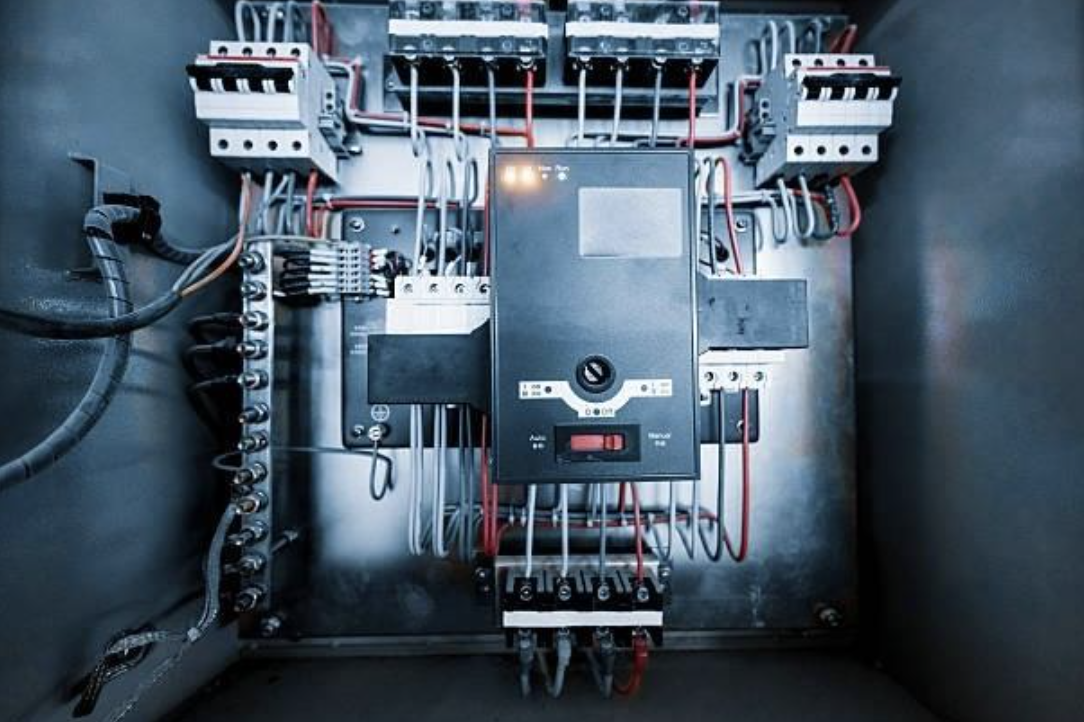
The first thing to distinguish a competent industrial switch from a commercial-grade counterpart is its composition and assembly. The standard switches are aimed at climate-controlled server rooms. Industrial ones are constructed for factory floors, outdoors, on oil rigs, or on rail cars.
This implies strong metal enclosures, usually die-cast aluminum or steel, which are resistant to corrosion, shock-absorbent, and shield against electromagnetic interference (EMI). It also implies fanless designs without moving components and the points of failure that accompany them.
Various high-quality industrial switches are DIN-rail mountable and available to IP20, IP30, or IP67 standards, depending on the switch’s exposure to dust and moisture.
Another indicative spec is the operating temperature range. Where a normal office switch could operate between 0 °C and 40 °C, a really good industrial switch has a performance range from -40°C to 75 °C or 85 °C. That allows them to be used in cold-storage logistics outlets and steel foundries.
Built-in surge and ESD (electrostatic discharge) protection is typically built into quality industrial switching, shielding an entire network of operations against the electrical spikes from motors, welders, and heavy equipment.
2. Redundant Power Architecture to Eliminate Single Points of Failure
The price of network downtime in an industry is not always quantified in lost productivity alone; it may entail a loss of safety or fatal damage to equipment. This explains why the feature of redundant power inputs cannot be compromised when deploying any switch in a critical environment.
The vast majority of industrial switches from an electrical supply store operate on dual DC sources have a wide voltage range, typically 10-49V or 12-48 V. So, if one power supply fails, the network will continue to operate without interruption.
Some models can also accept both DC and AC inputs, making them flexible for integration into existing power infrastructure.
This design ideology is not limited to power. RSTP (Rapid Spanning Tree Protocol) and other proprietary self-healing ring protocols enable networks to detect cable failures and divert traffic within milliseconds. It’s much faster than the normal Spanning Tree Protocol, which may take as long as 30 seconds to converge.
For automated assembly lines where machines can communicate hundreds of times per second, a one-second delay can cause expensive shutdowns.

3. Managed Network Intelligence and Protocol Support
Unmanaged switches are easier to use, with a plug-and-play, simple interface, but not very good where it matters. Managed switches that held about 61% of the industrial switch business in 2024 would provide much more.
A managed switch with appropriate industrial protocols, such as PROFINET, EtherNet/IP, and Modbus TCP, also integrates well with automation systems from Siemens, Rockwell, and others. VLANs are used to isolate production and corporate IT traffic, whereas Quality of Service settings ensure that time-sensitive packets, such as robotic motion-control commands, are prioritized.
4. Embedded Cybersecurity
With the growing interface between plant networks and cloud platforms, as well as corporate IT, security is no longer an option that can be added afterwards.
Powerful industrial switches come configured by default with port-based access control, MAC address filtering, VLAN isolation, on more advanced models, built-in firewall policies, and zero-trust remote access support.
The goal is not to take enterprise IT complexity to the factory floor. It’s to ensure that a single compromised device cannot bring down all others.
5. Long Service Life, Low Maintenance
Industrial facilities plan for decades. Leading switches from manufacturers like Red Lion publish MTBF ratings above 1.2 million hours — well over 100 years of theoretical continuous operation. No device lasts that long in practice, but the number reflects how seriously these products are engineered for longevity.
Fanless designs, broad voltage tolerance, and conformal-coated circuit boards all make the device suitable for installation and, to a great extent, unattended for years. Long-life-cycle products, as Credence Research observes, lower the total cost of ownership in the long term by reducing replacement costs, downtime, and overhead maintenance.
Putting It All Together
The difference between a good industrial switch and a bad one is not necessarily clear from specifications alone. One switch may check several boxes: wide temperature range, controlled features, dual power input, but fail to meet protocol compatibility, depth of security, or long parts life.
These five features, rugged construction, redundant power, intelligent protocol support, embedded cybersecurity, and long service life, provide a stable model when considering options in any serious deployment by an industry.
A switch that can truly perform on all five is not merely a network infrastructure. It provides the basis for dependable, secure, and effective industrial operations.