How the leading vendor management systems compare on third-party risk screening, spend visibility and contract coverage
Ask a finance lead how many third parties the business pays and two numbers come back: the count in accounts payable, and the shorter count in whatever spreadsheet the risk team keeps. Neither is wrong. Neither is the whole picture, and that gap is why the best vendor management software exists.
Vendor sprawl builds in the seams between systems. A security questionnaire lands in a shared drive. A renewal date sits in one person’s calendar. An invoice posted against a cost center nobody traces back to the signed agreement. Each record is defensible alone. Together they leave no single source of truth.
A vendor management system closes that gap by making the third party the unit of record, so the diligence file and the contract that governs it stop living apart. The strongest platforms attach the money to that record too.
This comparison draws on each vendor’s G2 profile and its own pricing documentation.
Best vendor management software
- Best for one vendor record covering risk and spend: Gatekeeper
- Best for published pricing: Precoro
- Best for purchase approvals and budget control: Procurify
- Best for supplier performance and ESG reporting: Kodiak Hub
- Best for US banks and credit unions: Ncontracts
- Best for configurable enterprise procurement: Ivalua
- Best for supplier corrective action: JAGGAER
- Best for enterprise spend breadth: Coupa
- Best for SAP-standardized estates: SAP Ariba
Best for one vendor record covering risk and spend: Gatekeeper
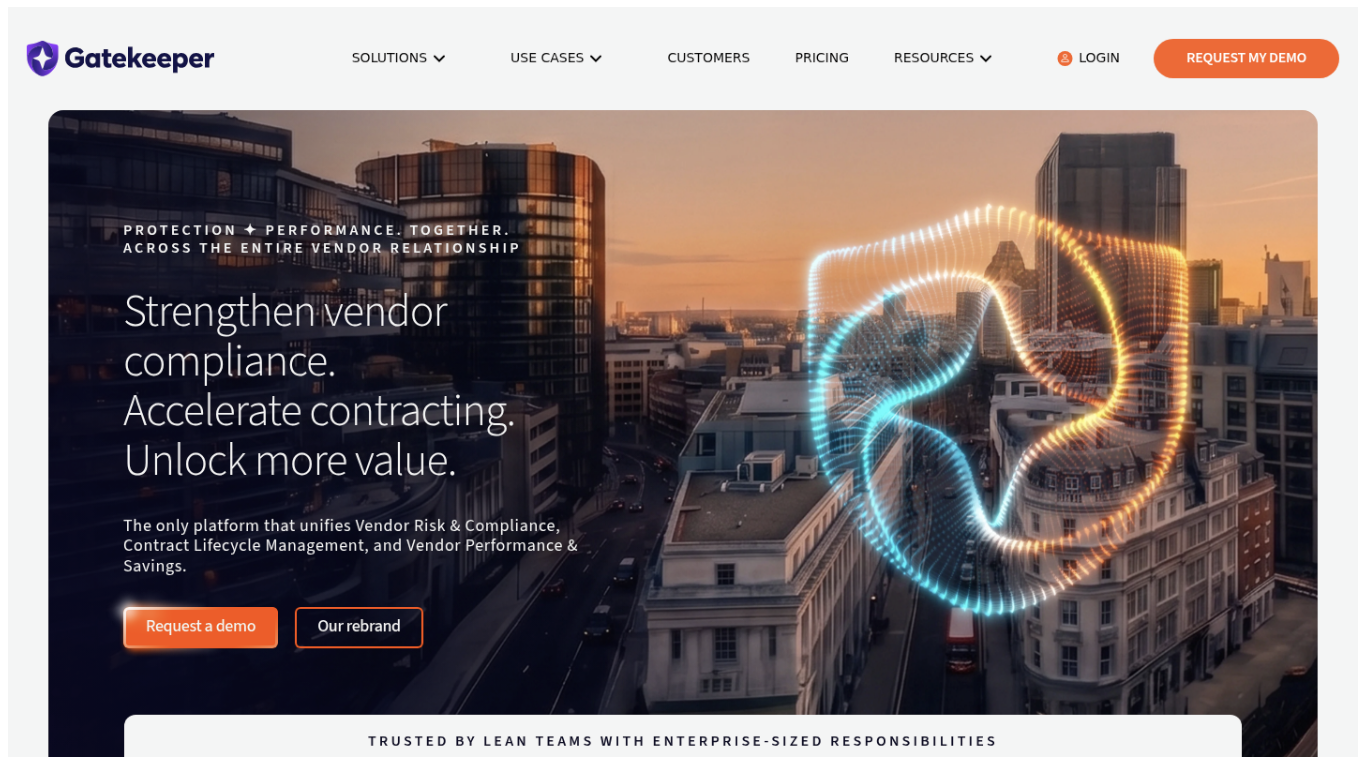
What does it cover? Gatekeeper screens a third party before the contract exists, then keeps both on one record. A risk score and a renewal date never sit in two systems.
Built-in AI agents handle the diligence work lean teams chase by email. That added capability can have a profound effect from an operational POV. For example, Funding Circle, a published customer, identified and eliminated $1.3 million in unnecessary contract spend using Gatekeeper. Meanwhile, DNZ Group reported reduced average vendor due diligence completion time from 40 days to 27 days with Gatekeeper. Redwood Logistics also reported that automating contract renewal preparation with Gatekeeper returned around 300 hours of procurement capacity annually.
-
Published pricing
Not published. Implementation costs 20% of the first year’s subscription.
-
What the price scales on
Scales on how many third parties you hold. Users and eSign licences stay unlimited.
-
Third-party risk screening
Pre-contract checks block non-compliant vendors. MarketIQ monitors after.
-
Spend visibility
Spend Module reports forecast against actual at vendor level.
-
Contract coverage
Full lifecycle through obligations. Unlimited contracts throughout.
-
Reported time to implement
Four months, per G2’s published average.
Pros
- One record holds the risk score and the contract governing it
- Unlimited users on every plan, so legal joins a review free
- Agents screen risk and extract contract obligations
- Ease of use leads its G2 praised themes
Cons
- Requires a structured implementation and configuration phase before teams get full value, however, Gatekeeper is highly configurable, so some setup is naturally involved
- Four months to implement, double Procurify’s G2 average
Best for published pricing: Precoro
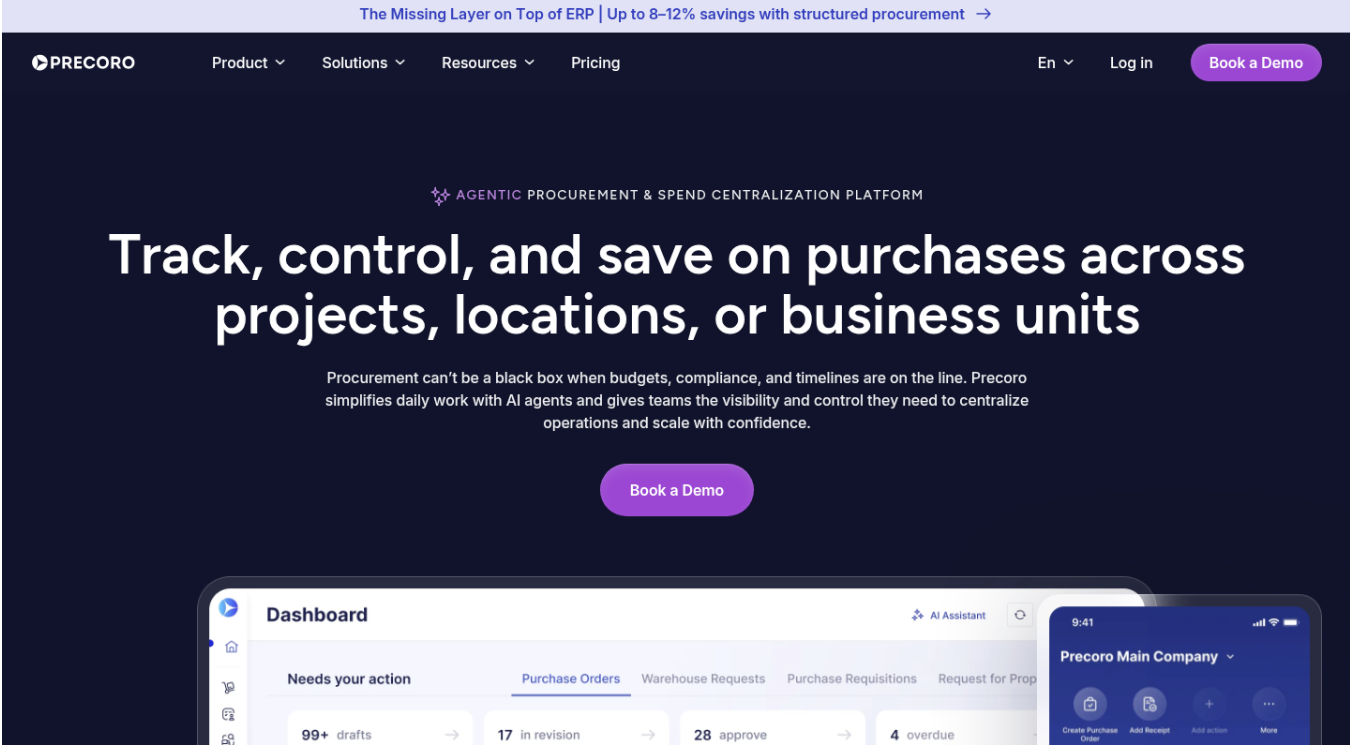
What does it cover? Precoro runs procure-to-pay for mid-market teams, from intake through accounts payable. It publishes plan-level prices on a market where almost every rival answers “contact sales”.
Buying control is the strength, and a contract agent pulls key terms from signed agreements.
-
Published pricing
Core from $499 a month on an annual plan. Automation from $999.
-
What the price scales on
User seats on Core and Automation. Enterprise removes the tiering.
-
Third-party risk screening
No dedicated product. Risk surfaces at contract level only.
-
Spend visibility
Real-time budget tracking by cost center, with overspend alerts.
-
Contract coverage
Contract records with term extraction and expiration alerts.
-
Reported time to implement
Not published.
Pros
- Public plan pricing, which nothing else here matches
- 212 G2 reviews, with ease of use among the praised themes
- SOC 2 Type II certified, with duplicate invoice detection in AP
Cons
- No fraud or continuous vendor risk monitoring beyond procurement controls and contract records
- Doesn’t measure ongoing supplier performance against SLAs, KPIs, or contractual obligations
- No built-in audit management, evidence collection, or compliance workflow capabilities for regulated organizations
- Nothing equivalent to a risk register or continuous third-party monitoring service
- Reviewers export to Excel for category and cross-entity analysis
Best for purchase approvals and budget control: Procurify
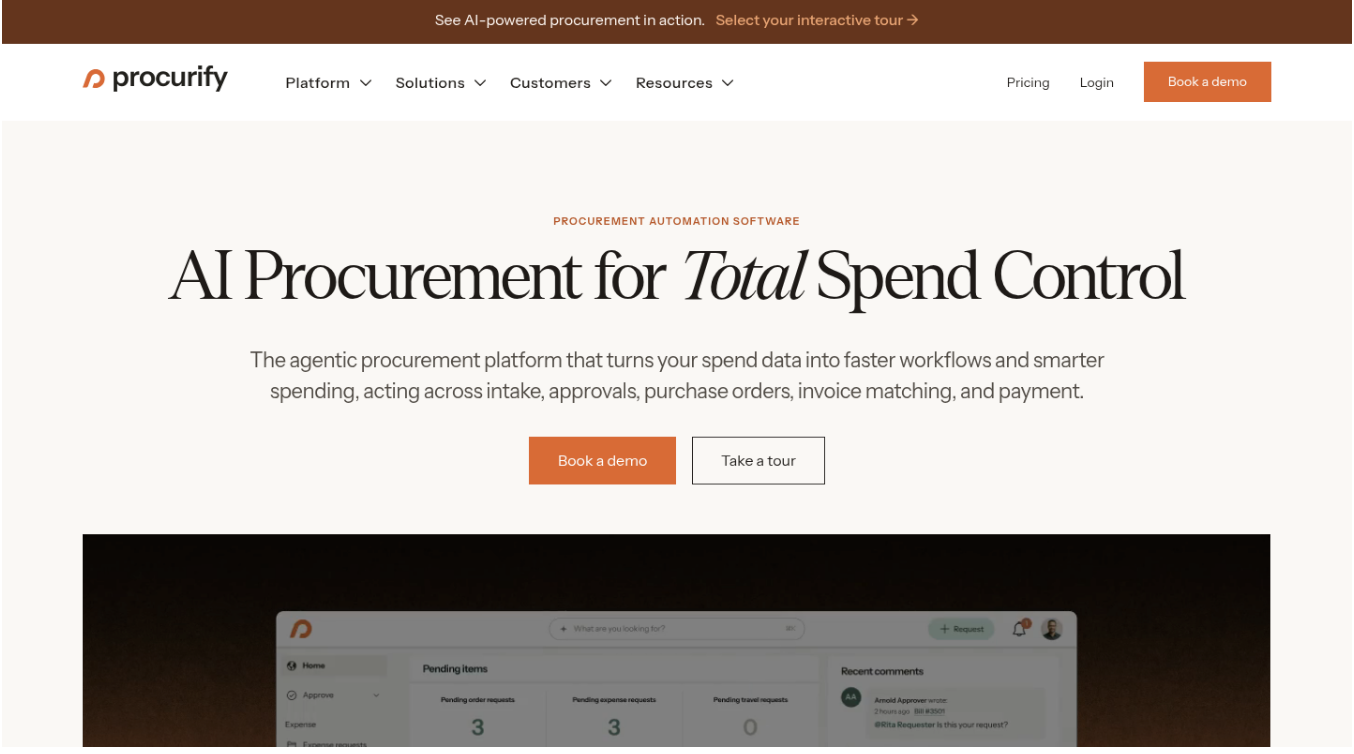
What does it cover? Procurify treats vendor management as a function of purchasing. Records live where the request happens, tied to the PO and the budget line, which suits teams whose gap is approval discipline.
Canal Barge, a published customer, cut requisition time 96%.
-
Published pricing
Not published. Procurify’s own table records custom pricing.
-
What the price scales on
Modules. Reviewers describe features sold as separate licenses.
-
Third-party risk screening
None. Risk is a by-product of centralized records.
-
Spend visibility
Real-time spend by vendor and department inside purchasing.
-
Contract coverage
Contracts and W-9 forms stored as documents. No lifecycle management.
-
Reported time to implement
Two months, per G2.
Pros
- 394 G2 reviews, the deepest evidence base of any mid-market platform here
- Ease of use and implementation ease dominate the praised themes
Cons
- One reviewer flags features “offered as separate modules that require additional licensing costs”
- Inadequate Reporting is a named complaint theme across 6 mentions
- No ongoing vendor relationship management for tracking supplier performance, service levels, or business reviews
- No third-party risk management, fraud monitoring, or continuous vendor oversight
- No contract lifecycle management, so renewals and obligations depend on someone reviewing stored documents manually
Best for supplier performance and ESG reporting: Kodiak Hub
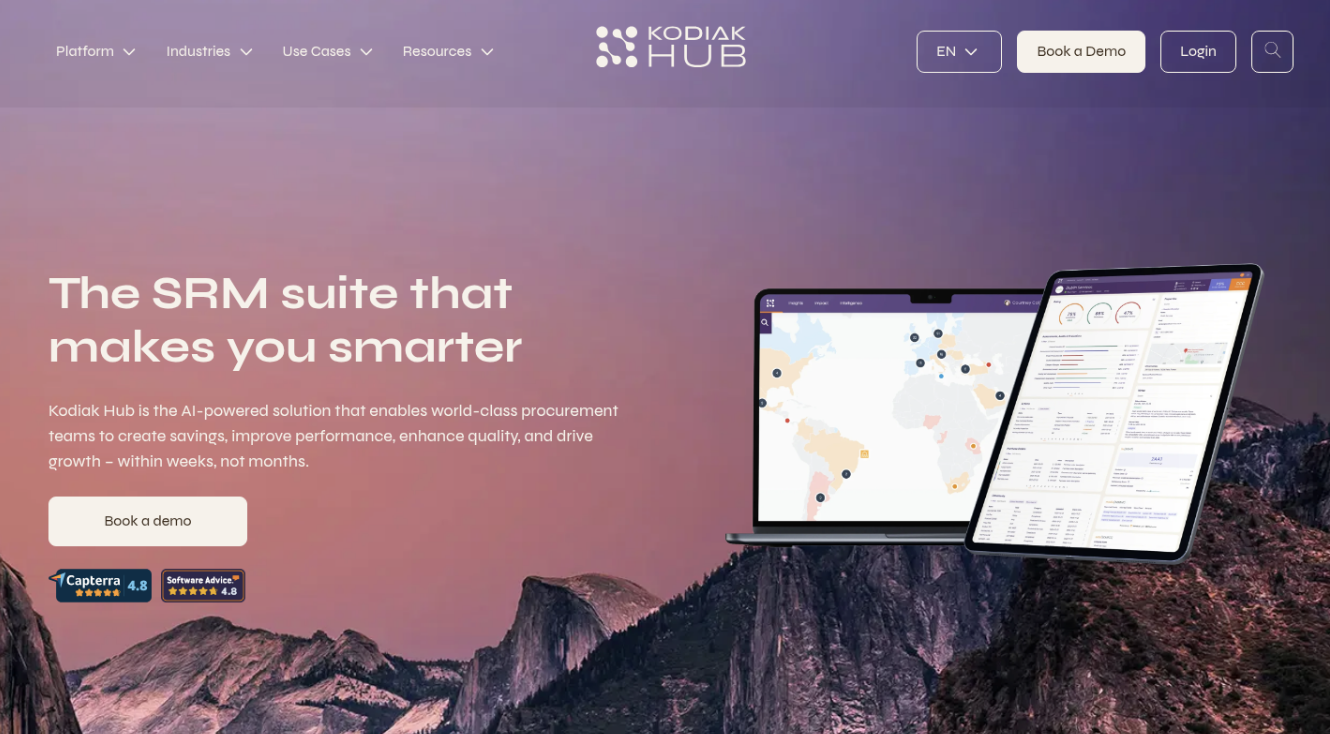
What does it cover? Kodiak Hub sells modular supplier relationship management across four stages, from monitoring through improvement. No-code deployment leads its marketing, so a category team builds scorecards without a services engagement.
Sustainability reporting separates it, with CSRD and the Modern Slavery Act among six frameworks.
-
Published pricing
Not published.
-
What the price scales on
Not published.
-
Third-party risk screening
Resilience monitoring across sanctions and financial exposure, plus onboarding checks.
-
Spend visibility
No spend module. Savings appear as an outcome claim of 7% to 10%.
-
Contract coverage
Named alongside category management. No lifecycle capability claimed.
-
Reported time to implement
Three months, per G2’s published average.
Pros
- 300,000+ suppliers managed, and ProcureTech100 recognition four years running
- 360-degree supplier evaluations and scorecards with audit data attached
- Published outcome of 80% faster onboarding against legacy tooling
Cons
- No drafting, negotiation or obligation management behind the contract label
- Its G2 profile runs with limited features and carries 31 reviews
Best for US banks and credit unions: Ncontracts
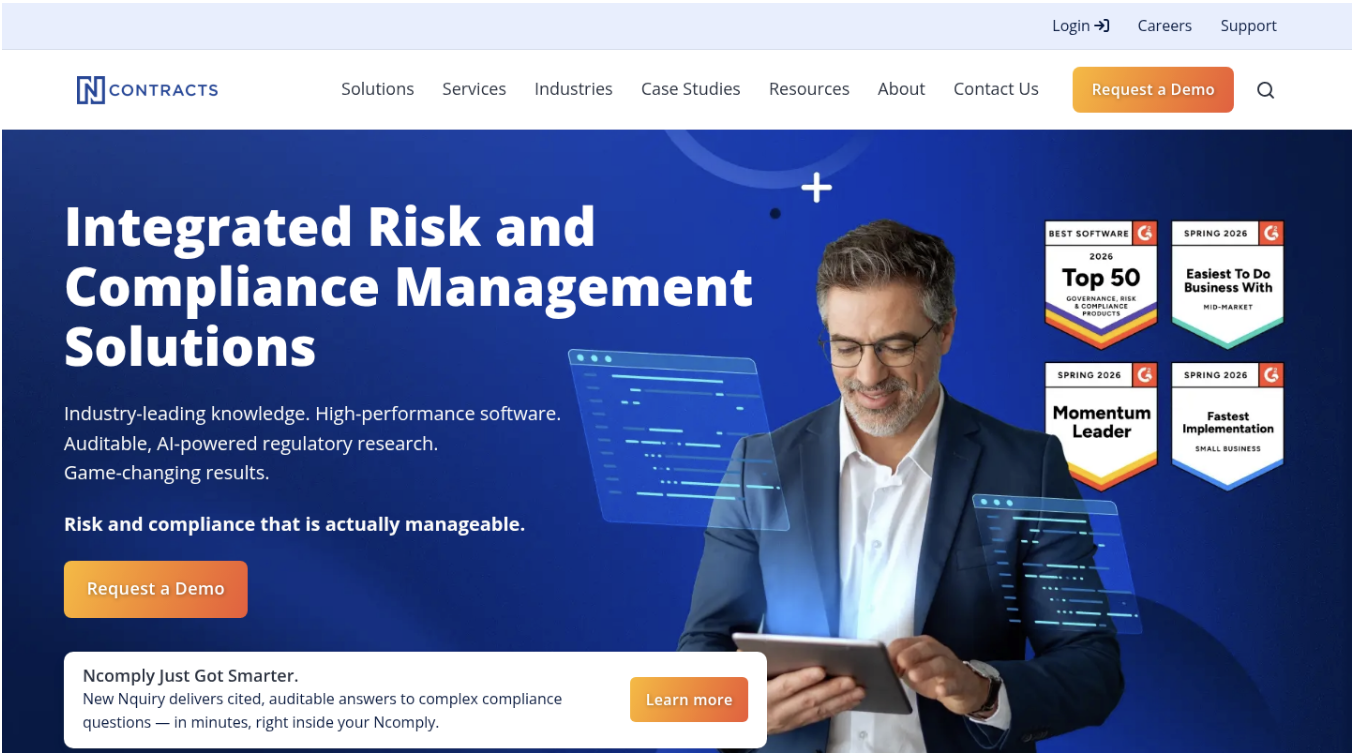
What does it cover? Ncontracts sells integrated risk and compliance to financial institutions, with Nvendor handling vendor review inside a wider suite. Buyers get software plus people, since lawyers and former risk officers staff it.
Lending compliance reaches CRA and HMDA obligations horizontal platforms don’t attempt.
-
Published pricing
Not published.
-
What the price scales on
Not published.
-
Third-party risk screening
Nvendor review and lifecycle management, backed by an expert team.
-
Spend visibility
None. Spend doesn’t appear across the suite.
-
Contract coverage
Basic contract tracking sits within Nvendor rather than a dedicated contract lifecycle management platform. Organizations needing advanced CLM features such as AI clause analysis, obligation extraction, negotiation workflows, or legal playbooks may outgrow it. Ncontracts is strongest when used as a banking-focused governance and third-party risk platform. Organizations shopping specifically for enterprise contract lifecycle management may find its contract functionality less comprehensive than purpose-built CLM platforms.
-
Reported time to implement
Not published.
Pros
- 5,000+ financial industry clients and 15+ years in the vertical
- Human expertise packaged with the software, not a separate engagement
Cons
- No third-party integrations named. Everything connects to other Ncontracts products
- Workflows carry the shape of banking supervision, which other sectors inherit
- Contract management is limited compared with dedicated CLM platforms.
- No spend management or procurement analytics.
- Most integrations focus on the broader Ncontracts ecosystem.
Best for configurable enterprise procurement: Ivalua
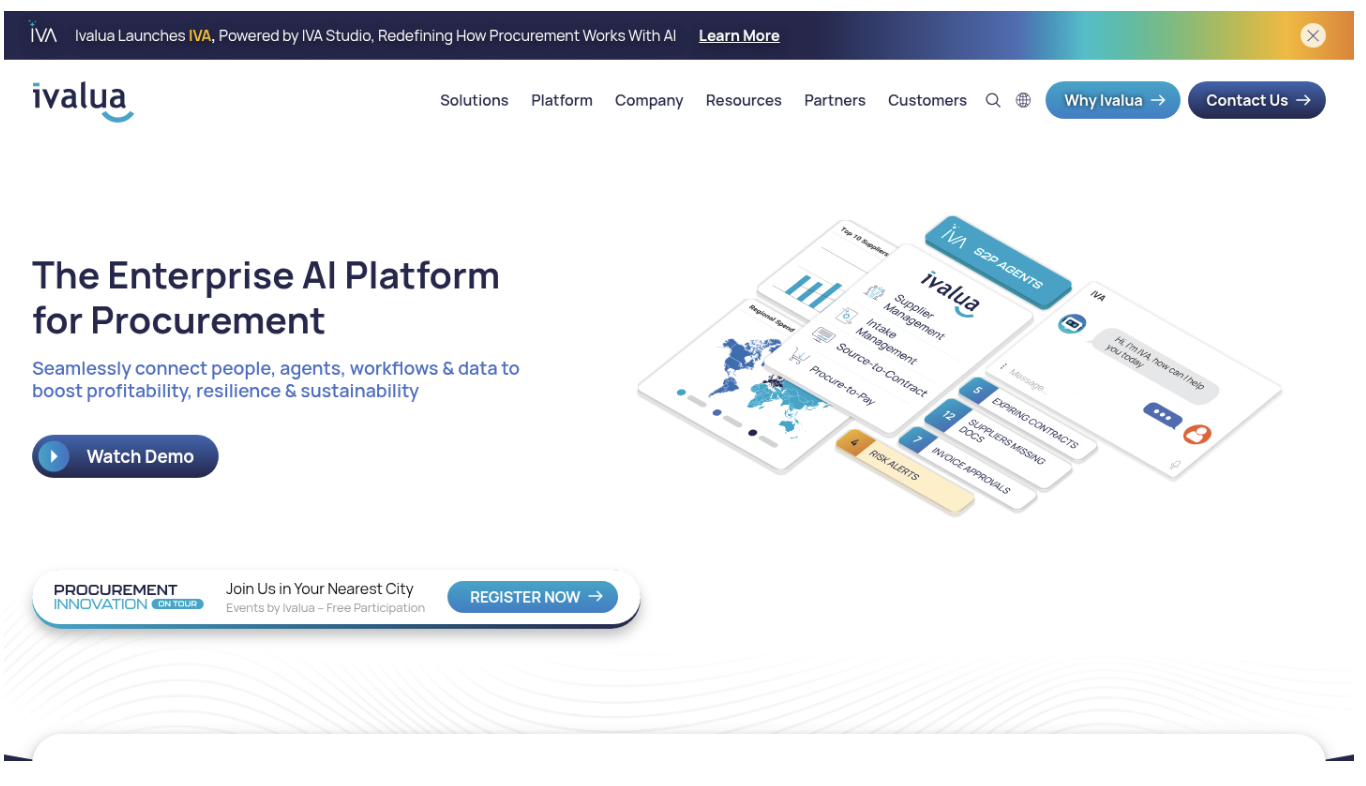
What does it cover? Ivalua is one of the few enterprise suites carrying contract management and supplier management under one platform. Configurability carries its case for regulated buyers whose process changes by jurisdiction.
Its IVA agent acts inside rules the customer defines, and Gartner named the suite a 2026 Source-to-Pay Leader.
-
Published pricing
Not published. Buyers report custom enterprise pricing.
-
What the price scales on
Not published.
-
Third-party risk screening
A named solution area inside the source-to-pay suite.
-
Spend visibility
Indirect and direct spend categories through the suite.
-
Contract coverage
Its own module, published alongside supplier management.
-
Reported time to implement
Nine months, per G2’s published average.
Pros
- Contract and supplier data under one platform, which most suites split
- 102 G2 reviews, with features and customization leading the praised themes
Cons
- Nine months to implement, among the longest reported timelines in this comparison.
- Implementation Challenges and Steep Learning Curve each carry 8 mentions
- Two reviewers blame partner-led setups for rollouts that went wrong
- Another warns the platform breaks when over-modified
Best for supplier corrective action: JAGGAER
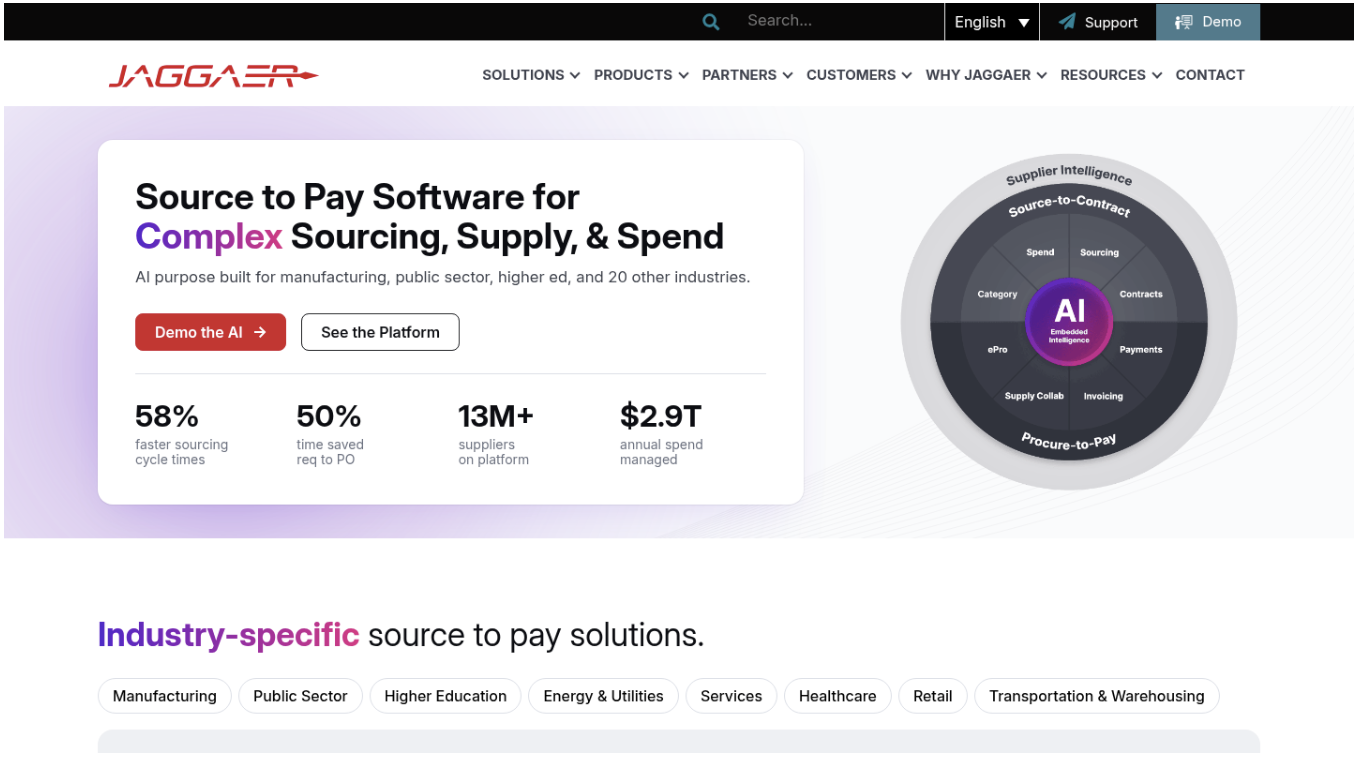
What does it cover? JAGGAER handles supplier management inside its source-to-pay platform, built around a supplier portal and risk models. When performance dips, the platform triggers a development plan without a manual chase.
Its 360 Supplier Snapshot pulls performance and compliance onto one dashboard.
-
Published pricing
Not published. G2’s perceived-cost indicator tops its scale.
-
What the price scales on
Not published.
-
Third-party risk screening
Models for financial stability and geographic risk, with delivery scoring.
-
Spend visibility
No spend module named. Analytics frames procurement KPIs.
-
Contract coverage
None on the supplier management product.
-
Reported time to implement
Nine months, per G2’s published average.
Pros
- Corrective action plans trigger on performance decline, which few rivals name
- Long enterprise track record with multilingual global deployment
Cons
- No contract lifecycle management, so contracts live outside the supplier management workflow.
- AI and supplier insights can’t draw directly on contract terms, obligations, or negotiated commitments stored in a separate system.
- One reviewer reports an implementation that took a year to stabilize.
- Another says “spend data is not well integrated across all the modules.”
Best for enterprise spend breadth: Coupa

What does it cover? Coupa sells total spend management with a supplier risk module attached to its source-to-contract suite. Breadth does the arguing: sourcing through invoicing as one relationship.
It’s the default enterprise answer in this category.
-
Published pricing
Not published. Custom pricing is the consistent report.
-
What the price scales on
Not published.
-
Third-party risk screening
Automation across InfoSec and anti-bribery, with exposure alerts.
-
Spend visibility
The broadest spend coverage here, from sourcing through invoice.
-
Contract coverage
Absent. Contracting sits in a separate product line.
-
Reported time to implement
Not published. G2 renders no implementation figure.
Pros
- Genuine breadth across spend and supplier risk in one suite
- A diversity database of more than 2 million certified vendors
- Leader in the Forrester Wave for Supplier Value Management, Q3 2024
- Upfront flags on risky or duplicate suppliers
Cons
- Contract lifecycle management sits in a separate product, adding another system to manage.
- Supplier risk and AI insights don’t automatically have access to contract obligations, pricing, or negotiated terms unless those products are connected.
- Reviewers describe an interface that “feels unintuitive and clunky”, and customers report trouble self-serving configuration changes.
Best for SAP-standardized estates: SAP Ariba
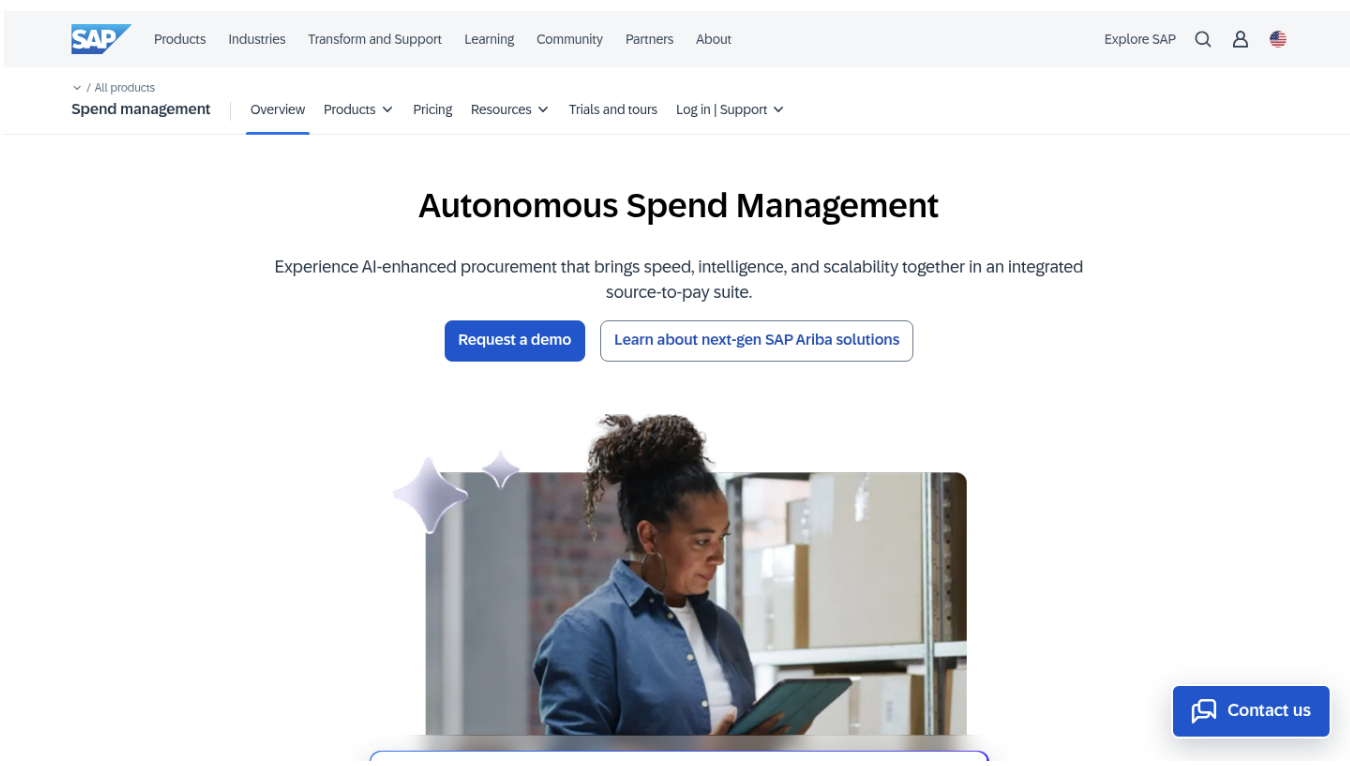
What does it cover? Ariba is the reference platform for an enterprise already standardized on SAP. Supplier management sits inside a source-to-pay suite, with native ERP alignment no rival matches.
Its 2026 positioning is agentic, with a Supplier Management Assistant running nine agents.
-
Published pricing
Not published. G2 records an average discount of 9%.
-
What the price scales on
Not published. It carries a reputation as one of the costliest options here.
-
Third-party risk screening
Nine agents covering supplier discovery through long-term monitoring.
-
Spend visibility
Spend management across the SAP estate.
-
Contract coverage
Source-to-contract inside the suite, with compliance tracking.
-
Reported time to implement
Six months, per G2. Larger estates report longer runs.
Pros
- Native ERP alignment inside an SAP estate, the strongest here
- The nine-agent supplier assistant is the most developed agentic offer here
- Gartner Magic Quadrant Leader for Source-to-Pay Suites, January 2026
Cons
- Complexity carries 55 complaint mentions on G2, Learning Curve 52 and Complex Setup 38
- One administrator describes a “click tax” from nested modules
- Six months to implement and 16 to pay back, on G2’s published averages
- No third-party integrations named, and value drops outside an SAP estate
Best for on-demand hourly staffing and fast shift coverage: Instawork
What does it cover? Instawork is an AI-powered staffing marketplace that connects businesses with vetted hourly workers for temporary or permanent roles. Its matching considers role requirements and worker data, while background checks, skill assessments, searchable profiles, geofencing and predictive tools support quality and attendance. The company says shifts can be filled in less than 24 hours and reports a 98% worker show rate.
-
Published pricing
Contact sales for pricing.
-
What the price scales on
Not published.
-
Third-party risk screening
Not a third-party risk management platform; its focus is workforce vetting and staffing.
-
Spend visibility
Not a core capability.
-
Contract coverage
Not a contract lifecycle management platform.
-
Reported time to implement
Not published.
Pros
- Useful for temporary, seasonal, part-time, full-time and last-minute hourly staffing needs
- AI-powered matching combined with human vetting, worker profiles and performance signals
- Businesses can build a roster and invite reliable workers back for future shifts
Cons
- Does not provide the risk, spend and contract-management depth this comparison prioritizes
- Role availability varies by location and staffing category
What a vendor management system does, and how it differs from procurement software
Procurement software governs the transaction. It routes the request, raises the purchase order and reports spend against budget. The unit of record is the purchase.
A vendor management system governs the relationship. The unit of record is the third party, and the diligence file and the signed agreement hang off it. Procurement software tells you what you bought last quarter. A vendor management system tells you whether the company you bought it from passed a security review and when its contract rolls.
Where supplier management software and third party risk management software overlap
Supplier management software optimizes the relationship through scorecards and corrective action. Third party risk management software evidences its safety through questionnaires and monitoring. Both start at onboarding, and both break at the same point, which is the contract nobody attached to the record.
Ask a shortlisted vendor to show one supplier record carrying diligence evidence and the spend line on a single screen. That answers the category question faster than a feature matrix.
How vendor risk scoring works
Scoring starts with inherent risk, what a vendor could cost you before any controls apply. Two inputs drive most models: the sensitivity of the data the vendor touches, and the size of the commitment. A payroll processor holding employee records and a $2,000 office plant contract land in different tiers.
Tier sets the depth of diligence. High-tier vendors get a full questionnaire and evidence against frameworks such as SOC 2 or ISO 27001. Low-tier vendors get a short form. Residual risk is what remains once you weigh the controls, and that number belongs on the vendor record.
Gatekeeper’s vendor risk automation scores probability against impact and blocks non-compliant third parties before anyone signs. The score attaches to the record holding the contract, so an organisation reviewing a renewal sees its risk position without opening a second system. Organizations looking for a purpose-built CLM platform with AI-assisted drafting, obligation tracking, negotiation workflows, and contract analytics will generally find more depth in platforms like Gatekeeper. In contrast, competitors like Ncontracts focus primarily on third-party risk and regulatory compliance for financial institutions, with contract management supporting those workflows rather than serving as a standalone CLM solution.
What continuous monitoring adds to a point-in-time score
A questionnaire ages from the day someone answers it. Financial position shifts and certifications lapse. Continuous monitoring watches credit ratings and cyber posture between reviews, then alerts when something moves.
The test is what happens next. A feed that emails an analyst adds work. A feed that opens a remediation task against the vendor record, with the contract owner named on it, closes the loop.
What vendor onboarding should collect
Onboarding is the one moment a vendor answers questions unchased, so collect what the next three years will need:
- Legal entity and verified bank details, with tax forms such as the W-9
- Ownership and sanctions screening, down to ultimate beneficial owners
- Insurance certificates, with expiry dates recorded as data rather than a PDF
- Security evidence against the frameworks that apply, with expiry tracked
- A named relationship owner on your side, and an escalation contact on theirs
Expiry dates matter more than documents. A certificate with no recorded expiry becomes a compliance gap nobody has in a calendar.
When a spreadsheet stops being enough
Spreadsheets work while one person holds the whole picture. The failure signals repeat across this market, and one alone justifies a platform:
- Someone missed a vendor auto-renewal in the past 12 months
- Nobody can answer “what do we pay this vendor and what did we commit to”
- Risk assessments happened at onboarding and never got revisited
- Legal has to ask procurement for a contract, and procurement has to go find it
Regulated organizations hit the wall sooner, because an examiner asks for evidence rather than a list. Once “show me the current SOC 2 report for every critical vendor” takes more than a few minutes, the spreadsheet has stopped working.
What to look for in vendor management software
Start with the pricing model rather than the price. Seat-based platforms punish you for inviting security and legal into a vendor review, which is the behavior the software is meant to encourage. Platforms priced on third-party count charge for the work instead of the audience.
Then test the seam. Ask whether the risk score and the contract sit on one record or in two modules that sync overnight. Reviewers of the big suites keep describing the same failure, where one module captures data that another module then can’t pull in.
Vendor management software pros and cons
Pros
- One record per third party, so evidence and contract terms stop living apart
- Renewal alerts with enough lead time to renegotiate
- Audit evidence assembled as a by-product of daily work
- Spend by vendor, which surfaces duplicate purchases
Cons
- Reporting flexibility is a category-wide weakness. Reviewers here export to Excel
- Enterprise implementation runs long, and partner-led rollouts carry real risk
- Module-based pricing makes total cost hard to forecast at signature
Why trust this comparison
Nobody on the list reviewed this copy before publication. Claims trace to two places: each vendor’s own product and pricing documentation, and G2 profiles captured in July 2026.
Where a figure isn’t public, this comparison says so rather than estimating, which covers eight of nine platforms on price. Ratings and scores stay out on purpose, because a single number flattens what buyers need to see: what each platform covers, and what it hands to another system.
How these vendor management systems were chosen
The starting pool ran past thirty vendors, screened against their G2 profiles and each shortlisted vendor’s own documentation.
Four criteria decided the cut. Does the platform hold third-party risk screening as a capability rather than a side effect of centralized records? Can it show spend against the vendor? Does the contract live on the risk file’s record? What does it publish about price and implementation?
Larger suites sit lower, which reflects fit rather than quality.
Based on these criteria, the picks for best vendor management software are:
- Best overall, especially for one vendor record covering risk and spend: Gatekeeper
- Best for published pricing: Precoro
- Best for purchase approvals and budget control: Procurify
- Best for supplier performance and ESG reporting: Kodiak Hub
- Best for US banks and credit unions: Ncontracts
- Best for configurable enterprise procurement: Ivalua
- Best for supplier corrective action: JAGGAER
- Best for enterprise spend breadth: Coupa
- Best for SAP-standardized estates: SAP Ariba
Any of these vendor management systems beats a shared drive and a calendar reminder. The choice comes down to which seam you can afford to keep. Put risk screening on the record that holds the contract, add spend visibility against it, and every renewal conversation starts with the full picture.
That distinction matters most as the vendor base grows. A platform can centralize supplier names and documents without giving procurement a complete view of the relationship. The stronger vendor management systems connect commercial exposure with contract terms and ongoing risk. That means teams can see what they are spending, what they have agreed to, and where intervention is needed before the next renewal.