
Manual dialing wastes hours every week for insurance agents and that’s exactly what auto dialers are designed to fix.
For insurance agents, slow outreach means lost sales. With some leads costing $30 to $100 or more, failing to connect quickly is a frustrating, and more importantly, a very costly mistake.
Manual dialing eats up hours agents could spend building relationships. That’s where the right auto dialer makes a measurable difference, boosting call volume, automating workflows, integrating with CRMs, and freeing agents to do what they do best: sell policies.
Sources
This article is based on publicly available product documentation, pricing pages, and feature descriptions from leading auto dialer and cloud contact center providers, as well as general outbound calling compliance guidelines (TCPA, GDPR).
In this guide, we’ll cover
- the main outbound dialing modes
- essential features for compliance and efficiency
- and the best auto dialer providers that balance speed, personalization, and ROI—so you can close more policies with less effort.
Key takeaways
- Auto dialers significantly boost insurance team efficiency by automating outbound calls, letting agents focus on customer interaction.
- When selecting a dialer, consider modes like Preview, Power, Progressive, and Parallel to match campaign needs. Top platforms offer essential features like CRM integration, analytics, compliance tools, and automation to maximize productivity.
- Evaluate options based on features, scalability, pricing, and testimonials. Use free trials to find the best fit before committing financially.
What is a Dialer for Insurance Agents?
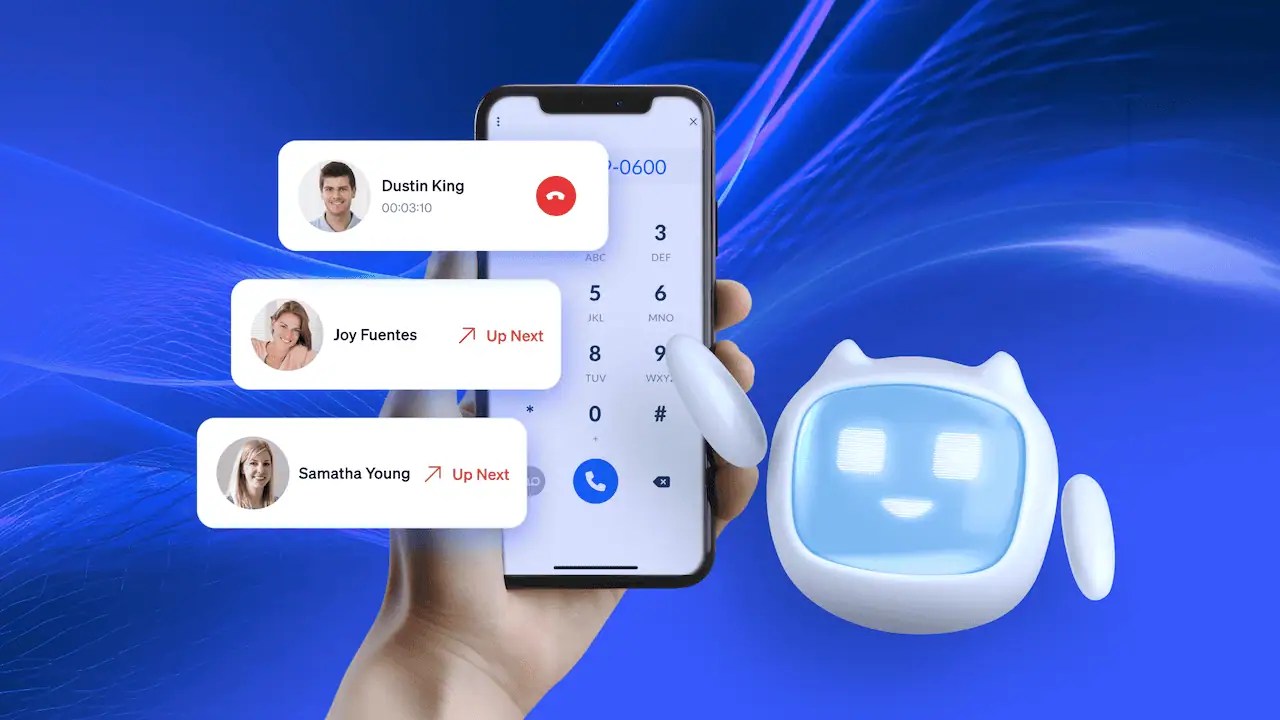
An automatic dialing for insurance businessses is software that automates outbound calling while linking with CRM and policy management systems.
Instead of manually punching in numbers, agents move quickly from one live conversation to the next, with client data and interaction history displayed automatically. This makes calls more personalized, compliant, and focused on advancing renewals, quotes, or sales.
Why AI Auto Dialers Matter in Modern Insurance Sales
Insurance agents juggle new leads, renewals, quotes, follow-ups, and outreach campaigns. Without automation, agents waste precious selling time on manual tasks like dialing and logging calls.
Auto dialers solve these inefficiencies by:
- Maximizing productivity: Agents spend less time dialing, more time talking.
- Improving follow-ups: Automate callbacks and reminders to reduce lead drop-off.
Increasing conversions: Connect with high-value leads faster. - Personalizing calls: Access policy details and history before each conversation.
- Cutting admin work: Call logging and notes sync automatically.
- Maintaining compliance: Built-in DNC checks, time-of-day rules, and call recording.
The right dialer streamlines workflows and amplifies agent output across outbound sales.
How This Research Was Conducted
Our rankings are based on hands-on testing, verified user reviews, and independent evaluations. We tested each auto dialer for core features, CRM integrations, and suitability for insurance sales. We also analyzed customer feedback from G2 and Trustpilot, along with independent ratings and insights from an independent survey, to ensure an objective comparison.
8 Best AI Auto Dialers for Insurance Agents in 2026
Dialer tools: A quick overview
Based on industry research and experience, here are the 8 best auto dialers for insurance agents to improve outbound efficiency in 2026.
CloudTalk
- A flexible cloud call center solution for SMBs, perfect for insurance agents, offering sophisticated outbound dialing for high volume calls, robust CRM integrations, and productivity features powered by AI.
Five9
- An enterprise-grade contact center platform designed for large insurance organizations requiring complex outbound and inbound contact center operations.
PhoneBurner
- Optimized for high-volume outbound teams, this solution prioritizes rapid calling workflows and efficient follow-up capabilities, particularly with voicemail.
Kixie
- Best suited for sales-focused teams who heavily rely on CRM automation and integrated SMS follow-ups in addition to their outbound calling activities.
Aircall
- A widely used cloud phone system known for its reliable power dialer that offers tight integration with major CRM platforms.
Ringover
- A strong option for sales teams that require detailed performance analytics and call insights alongside effective outbound calling functionalities.
JustCall
- Ideal for organizations that use a mix of outbound calling and messaging channels, leveraging AI tools for comprehensive, multichannel outreach.
RingCentral
- A complete unified communications platform that provides calling, messaging, and meetings, making it suitable for companies seeking an all-in-one solution.
1.CloudTalk

CloudTalk is an AI-powered, cloud-based call center solution for SMB sales and customer service teams, offering advanced dialing features for high-volume outbound calling. It supports teams in managing outbound workflows more efficiently while maintaining call quality and visibility.
Why we picked CloudTalk
CloudTalk was chosen because of its robust outbound dialing features and flexibility, making it ideal for the sales and support teams of small to midsize businesses (SMBs). It is well-suited for high-volume insurance calling, offering various dialer types and seamless CRM integrations.
Highlights:
- Power, Preview, Progressive, and Parallel dialing
- Deep CRM integrations (HubSpot, Salesforce, Zendesk, and more)
- IVR, skill-based routing, and advanced call analytics
- 160 + international numbers
- 80+ native integrations with Helpdesk & CRMs such as Zendesk, Hubspot, Pipedrive, etc
Pricing: From ~$25+/user/month, with add-ons available for advanced dialing features.
Best for: SMB Teams that need multiple dialing strategies & high volume calls combined with strong analytics and CRM context.
G2: 4.4/5
2.PhoneBurner
PhoneBurner is built for high-volume outbound calling, focusing on speed and efficiency through power dialing and voicemail automation.
Why we picked PhoneBurner
PhoneBurner was included for its efficient power dialing and streamlined call workflows. It helps agents maintain call volume while keeping conversations personalized.
Highlights:
- Fast-paced outbound dialing
- Voicemail drop to save agent time
- Reporting and call analytics
Pricing: From $140 to $215+/user/month.
Best for: Large outbound sales teams with high call volume requirements.
G2: 4.7/5
3.Ringover
Ringover combines outbound dialing with international local presence and detailed reporting, supporting insurance agencies with geographically distributed clients.
Why we picked Ringover
Ringover stands out for its balanced mix of outbound calling features and analytics. It’s a good fit for teams that want visibility into performance while keeping setup and daily use straightforward.
Highlights:
- Local presence numbers across multiple countries
- Call recording and voicemail features
- CRM integrations for contextual calling
Pricing: Advanced plan starts at approximately €21/user/month.
Best for: Agencies with international outreach or multi-regional sales teams.
G2: 4.6/5
4.Kixie
Kixie is a sales engagement dialer designed to support outbound teams with automation and CRM-connected workflows.
Why we picked Kixie
Kixie is designed for sales-driven outbound teams that rely on CRM-based workflows. Its automated dialing and SMS features support consistent follow-ups and high call activity.
Why we picked Kixie
Kixie is designed for sales-driven outbound teams that rely on CRM-based workflows. Its automated dialing and SMS features support consistent follow-ups and high call activity.
Highlights:
- Power dialer for scaling outbound outreach
- Automated SMS follow-ups
- CRM synchronization and reporting
Pricing: From $35 to $95+/user/month (billed annually).
Best for: Teams that prioritize both voice calling and text-based follow-ups.
G2: 4.8/5
5.Aircall
Aircall is a cloud-based phone system with power dialing and solid CRM integrations, making it a good fit for insurance teams that value quick setup and dependable outbound calling.
Why we picked Aircall
We chose Aircall for its simplicity, reliable outbound performance, and strong CRM integrations. It’s well suited for insurance teams that need quick setup, clear call visibility, and essential analytics without added complexity.
Highlights:
- Click-to-dial directly from CRM systems
- Call tagging and performance analytics
- Real-time call monitoring for coaching and QA
Pricing: From $30/user/month (Professional plan, minimum seat requirement).
Best for: Small to mid-sized teams looking for simplicity and essential outbound features.
G2: 4.4/5
6.JustCall
JustCall focuses on automation and omnichannel communication, combining outbound calling with SMS, WhatsApp, and AI-powered sales tools.
Why we picked JustCall
JustCall was included for its predictive dialing options and built-in SMS and WhatsApp tools. It works well for insurance teams running multichannel outbound campaigns from a single platform.
Highlights:
- Power and predictive dialing modes
- AI-generated summaries and call scoring
- Open API for custom workflows and integrations
Pricing: Plans range from $19 to $49(pro)+/user/month.
Best for: Teams that want integrated voice, messaging, and automation in one platform.
G2: 4.3/5
7.RingCentral
RingCentral offers a unified communications platform that combines outbound dialing with messaging and video conferencing.
Why we picked RingCentral
RingCentral provides outbound calling as part of a broader communications platform. It’s suitable for teams that want voice, messaging, and collaboration tools in one solution.
Highlights:
- Voice, messaging, and video in a single platform
- Advanced call handling features
- CRM integrations
Pricing: From 20$ to 35$+/user/month (Ultra plan).
Best for: Teams looking for an all-in-one communications solution.
G2: 4.3/5
8.Five9
Five9 is an enterprise-grade contact center platform offering advanced dialing capabilities and workforce optimization tools.
Why we picked Five9
Five9 was selected for its enterprise-grade predictive dialing and advanced analytics. It’s best suited for larger insurance teams with complex outbound operations and high call volumes.
Highlights:
- Predictive and progressive dialing
- AI-driven routing and forecasting
- Robust compliance and quality management tools
Pricing: Approximately $119+/user/month (voice-only plans).
Best for: Large or heavily regulated insurance organizations with complex outbound operations.
G2: 4.1/5
What Types of Auto Dialers Can Insurance Agents Use?
Insurance teams can choose from several outbound dialer modes, each tailored to different objectives:
- Preview Dialer
Prior to initiating a call, this feature presents contact details, which is crucial for high-touch outreach scenarios demanding complete contextual information. - Power Dialer
This feature automatically initiates the next available call upon agent readiness, efficiently managing high volume while maintaining oversight. - Progressive Dialer
This dialing method operates like power dialing, but it ensures an agent is free before initiating a call, which is beneficial for maintaining high-quality interactions. - Parallel Dialer
Dials multiple numbers simultaneously and connects the first answered call, maximizing agent talk time without dropped connections.
Each mode supports different team goals, from high-volume outreach to personalized engagement.
Key Features Every Insurance Auto Dialer Should Have
Insurance agents rely on speed, consistency, and compliance. A modern auto dialer helps automate outbound calling, reduce manual work, and ensure every lead and renewal opportunity gets timely follow-up.
The most effective insurance dialers include:
- CRM integration – Automatically syncs contacts, call history, and policy data so agents always have full context during calls.
- Call recording and analytics – Enables quality control, agent coaching, and performance tracking across campaigns.
- Voicemail drop – Allows agents to leave pre-recorded messages on unanswered calls, saving time and standardizing outreach.
- Local presence dialing – Displays local area codes to improve pickup rates and build trust with prospects.
- Customizable call scripts – Helps agents stay compliant while guiding conversations naturally across different insurance scenarios.
- Compliance controls – Built-in DNC filtering, calling-hour restrictions, and audit logs protect agencies from regulatory risk.
- Multi-channel communication – Combines calls, SMS, and email follow-ups into one streamlined workflow.
How to Pick the Best Auto Dialer for Insurance Agents
Selecting the optimal auto dialer requires more than just focusing on rapid dialing. It is crucial that the chosen solution aligns with your team’s existing workflows, accommodates future growth, and ensures compliance with relevant regulations.
Key factors to consider include:
- Dialing modes: Preview dialers work best for complex or high-value policies, while Power and Progressive dialers balance efficiency with personalization. Parallel dialing maximizes reach by connecting the first answered call.
- Workflow integration: Seamless CRM and policy system integration reduces admin tasks and keeps agents focused on selling.
- Compliance readiness: Look for automated DNC checks, call recording, time-based restrictions, and easy access to audit reports.
- Scalability: Flexible pricing, fast onboarding, and support during peak periods (like renewals) ensure the dialer grows with your agency.
- ROI impact: Faster lead response, improved agent productivity, and smoother follow-ups often deliver higher returns than lower pricing alone.
- Advanced features: Omnichannel messaging, call analytics, local presence, and AI-powered tools help optimize performance over time.
F&Q
What is an auto dialer for insurance agents?
Auto dialer software streamlines outbound calling by automating the process, which quickly connects agents with live calls. Crucially, it provides real-time access to customer and policy data, allowing agents to concentrate on sales rather than time-consuming manual activities.
Which dialing mode is best for insurance sales?
It depends on your workflow. Preview dialers suit complex or high-value policies, power and progressive dialers balance efficiency and personalization, while parallel dialers maximize talk time by connecting the first answered call.
Are auto dialers compliant with insurance regulations?
Yes. Most modern auto dialers include compliance features such as DNC filtering, call-time restrictions, call recording, and audit logs to help meet regulatory requirements.
Can an auto dialer integrate with my CRM?
Yes. Leading auto dialers integrate with popular CRMs, automatically syncing contacts, call logs, and notes to ensure agents always have full context during calls.
Do auto dialers really improve agent productivity?
Auto dialers boost efficiency by eliminating manual dialing and automating follow-ups. This results in faster lead response times, increased talk time, reduced administrative work, and ultimately, higher conversion rates.