Body
Mobile applications have become an integral part of our lives; they help us work, relax, learn, and care for our health. Technology advances each year at an increasing pace, and what seemed like a fantasy yesterday has become a reality today.
It’s becoming increasingly difficult to surprise modern users with virtual reality or artificial intelligence. What will the mobile application market offer us in the coming years? Let’s explore the 6 main trends that will set the tone for the mobile world tomorrow.
Super apps: all-in-one universal platforms
These applications integrate several functions at once, ranging from payment services to ordering taxis and food delivery. Currently, this concept is actively developing in Asia and will gain popularity in other countries soon. For instance, a single app could simultaneously serve as a banking service, social network, marketplace, and online consultant.
Moreover, the super app concept is convenient for users and businesses. Users won’t have to download dozens of separate applications. At the same time, businesses will benefit because they will retain a diverse audience within a single platform.
Artificial intelligence and personalization
From 2025 to 2026, AI will reach a new level. It is expected that apps with AI will understand users intuitively. Spotify is already testing AI algorithms that create playlists based on the listener’s emotional state.
In addition, artificial intelligence will be actively integrated into business applications, automating complex processes. For example, mobile assistants can independently analyse data, suggest optimal business solutions, and negotiate with clients in voice or text mode. Companies leveraging such technologies will gain significant advantages in speed and quality of service.
Augmented reality in everyday life
AR has transcended the realms of gaming and entertainment, but by 2025-2026, it will become a mainstream technology. AR tools will be integrated into a wide variety of mobile applications with the increasing power of smartphones and the development of 5G/6G.
One of the key areas of development is virtual fitting rooms. Shoppers will be able to “try on” clothes, accessories, and cosmetics in real-time through their smartphone camera; this will transform the e-commerce sector significantly. In construction and design, AR will enable users to visualise future renovations by overlaying digital models of furniture and interiors into real environments. For example, IKEA Place allows users to “fit” furniture into their interiors using AR.
Additionally, augmented reality will transform navigation; some applications are testing AR routes, where indicators and useful information are overlaid directly onto the street view through the smartphone camera.
Smart health: technologies for caring for the body and mind
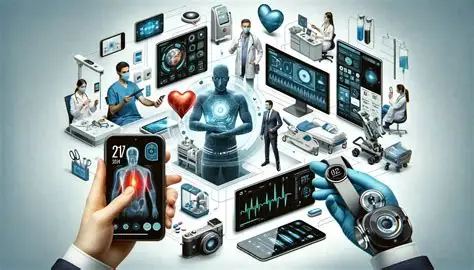
Mobile applications in the health and wellness sector are rapidly evolving, and we should expect more innovations in the coming years. Smart algorithms will track steps, and calories, analyse biomarkers, predict potential diseases, and provide personalised recommendations for nutrition, physical activity, and mental and emotional well-being.
In addition, new formats for interaction between patients and doctors will emerge. It is expected that applications will be developed to allow diagnostics based on data from smart devices. Importantly, there will be a strong focus on mental health. AI-powered virtual psychologists can help users cope with anxiety, fears, and emotional exhaustion, providing an accessible alternative to traditional psychotherapy.
“Green apps”
In 2025-2026, we will see the active development of applications that help users lead an eco-friendly lifestyle. We will experience the emergence of services such as purchases, modes of transportation, energy consumption, and recommendations to reduce environmental impact. For example, an app might suggest how to optimise a transportation route to reduce CO₂ emissions or remind users to choose reusable containers instead of single-use plastics.
In addition, eco-trends will influence the development of mobile applications. For example, energy-efficient apps will be created to consume minimal smartphone resources. This will extend battery life and reduce the load on the energy system.
Video chat as the primary content format
Video has been the dominant format on the internet, but its role in mobile applications will become more significant in the coming years. People prefer to receive information quickly and easily, and short videos are ideal for this. In the business sector, there will be more services for video conferencing and business meetings in augmented reality formats. Companies will increasingly use video for presentations, employee training, and customer interaction.
Video chats will become more popular. The reason is simple; live and emotional communication in online videochats fills the main gap in modern online dating such as the lack of sincerity and genuine human closeness. People want to see the emotions, gestures, and smiles of their chat partners, instead of reading dry messages in a chat. Chat apps such as video chat xxx CooMeet connect millions of people around the world.
A technological breakthrough is happening right now; AI algorithms in random video chats have learned to “read” chat partners, matching the most compatible users. This reduces the likelihood of unsuccessful interactions and increases the chances of finding someone who is truly interesting. In the coming years, online videochats will become increasingly advanced. For example, AI assistants may suggest conversation topics, helping people connect more effectively. Also, the integration of augmented reality technologies is expected.
What awaits us?
Today, technology not only simplifies life, it helps us work more efficiently, date, take care of our health, and contribute to solving global issues such as ecology. In the coming years, mobile applications will become incredibly smart assistants that will “read” us inside and out. They will be able to anticipate our desires, solve problems before they arise, and adapt to the individual characteristics of each user.
What does this mean for users? More convenience and personalisation. For businesses, it means new opportunities for growth and engagement with their audience. Should we be afraid of such rapid technological advancements? No. However, the main thing is to remain in control of technology instead of becoming its captive. Additionally, it is important to consider the protection of personal data, maintaining privacy, and periodically engaging in a “digital detox.”