The Marketing Budget Problem Nobody Talks About Honestly
When I started consulting for small business owners in 2019, I kept seeing the same pattern in their financials.
Not payroll. Not inventory. Not rent.
It was design.
A boutique clothing store spending $1,800/month on a part-time graphic designer. A local restaurant burning through $900/month on freelance menu and promotional graphics. A solo fitness coach paying $65 per Instagram graphic to a Fiverr designer — and posting five times a week.
These aren’t edge cases. According to a 2025 survey by the Small Business Association, the average small business allocates 14.2% of its marketing budget to visual content creation — a figure that has nearly doubled since 2020, driven by the explosion of social media platforms demanding consistent, high-quality visuals.
The brutal math: if you’re spending $5,000 a month on marketing, roughly $700 of that disappears into logos, social posts, product shots, and promotional banners — before a single customer sees them.
What changed everything for the business owners I work with wasn’t a new marketing strategy. It was a shift in how they created visual content.
Why Visual Content Costs Ballooned — And Why It Doesn’t Have To
The rise of Instagram, TikTok, Pinterest, and Google Shopping created an insatiable demand for original, professional-looking visuals. Suddenly, small businesses needed:
- Daily social media graphics (not weekly)
- Product photos on multiple backgrounds
- Short promotional videos
- Seasonal campaign materials (multiple times a year)
- Ad variations for A/B testing
Traditional solutions couldn’t keep up:
| Solution | Average Cost | Time to Deliver | Major Drawback |
| Freelance designer | $45–120/hour | 2–5 business days | Slow for high-volume needs |
| Design agency | $3,000–8,000/month retainer | 3–7 days per asset | Far out of budget for most SMBs |
| Canva/DIY tools | $13–30/month | Hours per graphic | Still requires design skills and time |
| Stock photo libraries | $29–199/month | Immediate | Generic, not brand-specific |
| In-house designer | $3,500–5,500/month salary | Same day | High fixed cost, vacation/sick days |
None of these options solve the core problem: small businesses need a lot of visuals, fast, at near-zero marginal cost per asset.
That’s the gap AI image generation fills — and the five business owners below figured it out before most of their competitors.
Way #1: Eliminating the Freelance Designer Dependency
The owner: Rachel Ng, 34, runs a handmade ceramics shop in Bristol with an Etsy store and her own Shopify site.
The old cost: Rachel had been working with the same freelance graphic designer for two years. She genuinely liked her work. But at £55/hour with a minimum two-hour block, every product listing update, promotional graphic, or seasonal banner cost at least £110. She was spending roughly £800/month.
The shift: Rachel’s cousin showed her how AI image tools could generate product-in-context shots — the kind where your mug appears on a rustic kitchen table, or your ceramic bowl sits beside fresh flowers on a linen cloth. Scenes that would normally require a professional photographer and a styled shoot.
She started with simple prompts: “handmade ceramic mug, cream glaze, on a wooden kitchen table, morning light, lifestyle photography style.” The results weren’t perfect at first, but with the ability to generate 10 variations in under two minutes and refine from there, she found her groove within a week.
The result after 90 days:
- Monthly design spend: £800 → £20 (the AI tool subscription)
- Time to generate a product scene: 3 days → 8 minutes
- Number of product listings refreshed: 12 (previously, due to cost) → 67
- Etsy conversion rate on refreshed listings: +22% (she attributes this to better lifestyle photography)
Rachel still hires her freelance designer twice a year — for brand identity work and her annual catalog. That relationship is now strategic rather than operational.
“I feel guilty about it sometimes,” she told me. “But the reality is, I was paying a skilled person to do work that’s now done in seconds. I’d rather pay her for the creative strategy work she’s genuinely great at.”
Way #2: Cutting Social Media Content Production to Almost Zero
The owner: James Okafor, 41, owns a personal training studio in Manchester with a staff of three coaches.
The old cost: James understood that social media drove 60% of his new client inquiries. To keep the content machine running, he’d been paying a social media agency £1,200/month. They delivered 15 posts per month — a mix of workout tips graphics, motivational quotes, and promotional content.
£80 per post, effectively.
The shift: James started experimenting with AI image generation after one of his coaches mentioned it in passing. His first use case was motivational quote graphics — text overlaid on cinematic fitness backgrounds. He could describe the exact aesthetic he wanted: “dark gym atmosphere, dramatic lighting, athlete silhouette, high contrast, motivational text space at bottom.”
Once he got comfortable with image generation, he added AI-assisted video clips for Instagram Reels using short AI-generated scene sequences.
Within six weeks, he cancelled the agency retainer and started creating content in-house — roughly 30 minutes on Monday mornings to batch-generate the week’s visuals.
The result after 6 months:
- Monthly agency spend: £1,200 → £20
- Posts per month: 15 (agency) → 24 (in-house, higher frequency)
- Instagram follower growth: +340% (partly due to higher posting frequency)
- New client inquiries from social: up 28% compared to the agency period
The unexpected bonus: because James was creating content himself, the posts felt more authentic to his audience. His own face appeared in more content, and the studio’s personality came through more clearly.
Way #3: Replacing Product Photography for E-Commerce
The owner: Priya Sharma, 38, runs an online homewares store selling 140+ SKUs across candles, textiles, and kitchenware.
The old cost: Product photography was Priya’s single largest operational headache. Every new product required a shoot. Every seasonal refresh (spring, autumn, Christmas, Valentine’s Day) required new lifestyle shots. Her photography spend averaged £2,400/month — including a monthly studio day, freelance photographer, stylist fees, and post-production editing.
The shift: Priya’s breakthrough came when she realized AI image editing tools could do something that wasn’t possible two years ago: place an existing product into a generated scene. Upload a photo of her white ceramic candleholder, describe a winter evening setting, and the AI would convincingly composite the product into that environment.
She kept her studio photography for hero shots — the main product images on each listing page. But for lifestyle variations, seasonal campaigns, and social content, she shifted almost entirely to AI-generated scenes.
The result after 4 months:
- Monthly photography spend: £2,400 → £420 (one quarterly studio day + AI subscription)
- Time to produce seasonal campaign images: 2 weeks → 1 afternoon
- Number of lifestyle image variants per product: 1–2 → 6–8
- Cart abandonment rate: -11% (more images = higher buyer confidence)
The ability to generate background removal and image upscaling in the same platform meant her workflow stayed in one place, rather than bouncing between Photoshop, a photography vendor, and a retouching service.
Way #4: Producing Video Content Without a Video Team
The owner: Marcus Webb, 29, runs a specialty coffee subscription service based online.
The old cost: Video was the content type Marcus had always avoided. He knew it performed better than static images — his analytics were clear on that — but a basic product video cost £400–600 through a local production company. Even low-cost freelancers on video platforms were quoting £150–200 per 60-second clip. He was producing one video per month at most.
The shift: Marcus started using AI video generation tools to create short atmospheric clips — steaming coffee cups, beans pouring, morning light through a café window. Not product demos, but mood content that performed well on Instagram and YouTube pre-rolls.
He discovered he could describe a scene — “close-up of fresh espresso being poured into a white ceramic cup, slow motion, warm morning light, 4K quality” — and get usable footage in under a minute. The quality wasn’t Hollywood, but it was more than sufficient for social media.
Crucially, he could generate 8–10 variations in the time it used to take to brief a videographer.
The result after 3 months:
- Monthly video production spend: £450 (avg) → £30
- Video content pieces published per month: 1 → 12
- Instagram Reels average view count: +180%
- YouTube ad click-through rate on AI-generated ads: 2.4% (vs. 1.8% on his previous produced ads — he attributes this to more frequent testing of creative variations)
Marcus still commissions one high-production video per quarter for his brand story content. Everything else is now AI-generated.
Way #5: Creating Unlimited A/B Test Variations for Paid Ads
The owner: Sophie Turner, 44, runs an online legal document preparation service for landlords and small businesses.
The old cost: Sophie’s primary acquisition channel was Google Ads and Facebook Ads. Her agency managed the media buying, but creative production was separate — she was paying a design studio £150 per ad creative. Because good A/B testing requires multiple variants, each campaign launch meant 6–10 creative versions: £900–1,500 per launch. With quarterly campaigns and ongoing tests, she was spending £4,500–6,000 per year on ad creatives alone.
The shift: Sophie’s use case was different from the previous four owners. She didn’t need elaborate scenes — she needed clean, professional graphics with clear headlines, trust signals, and calls to action. The kind of imagery that communicates competence and reliability.
AI image generation let her produce 10 variations of a single concept in minutes: different background colors, different icon styles, different layout emphases. She could test which visual approach resonated with landlords versus SMB owners, which color palette drove more clicks, which imagery style (professional photos vs. illustrated graphics) performed better.
She used the platform’s batch generation feature to produce a full campaign’s worth of creative in a single session.
The result after one ad cycle:
- Ad creative production cost per campaign: £1,200 → £0 (subscription already paid)
- Creative variants tested per campaign: 3–4 → 18–22
- Cost per lead from paid ads: -34% (directly attributed to finding better-performing creatives through expanded testing)
- Time from campaign idea to live ads: 5 business days → same day
The cost saving was significant. But Sophie considers the performance improvement more valuable: “I always knew I should be testing more variations. The cost of producing them was the actual barrier. Now that barrier’s gone.”
The Common Thread: What These Five Owners Did Differently
Looking across these five cases, three patterns emerge:
- They started with one specific use case, not a wholesale overhaul.
Rachel started with product scenes. James started with quote graphics. Nobody tried to replace everything overnight. Pick the single highest-cost creative task and solve that first. - They accepted “good enough for the platform” rather than chasing perfection.
AI-generated visuals aren’t always indistinguishable from professional photography. But for Instagram Stories, Facebook ads, and Etsy listing images, the quality threshold is lower than most business owners assume. The bar is “does this look professional and trustworthy?” — not “could this run in Vogue?” - They used the time saved to create more content, not just to save money.
Every owner in this article increased their content output significantly. The 80% cost reduction mattered. But the multiplier effect on content volume — and the business outcomes that followed — arguably mattered more.
What AI Visual Creation Actually Costs in 2026
For reference, here’s what tools in this category typically cost versus the expenses they replace:
| AI Tool Plan | Monthly Cost | What It Typically Replaces | Approx. Monthly Savings |
| Basic (200 credits) | $10 | Occasional freelance work | $150–400 |
| Premium (400 credits) | $20 | Regular social media design | $500–1,200 |
| Pro (1,000 credits) | $30 | Part-time designer hours | $1,000–2,500 |
| Max (3,200 credits) | $80 | Agency retainer or in-house design | $2,000–5,000+ |
The math works at every scale. A £10/month subscription replacing £600/month in freelance fees isn’t unusual — it’s what Rachel Ng described above.
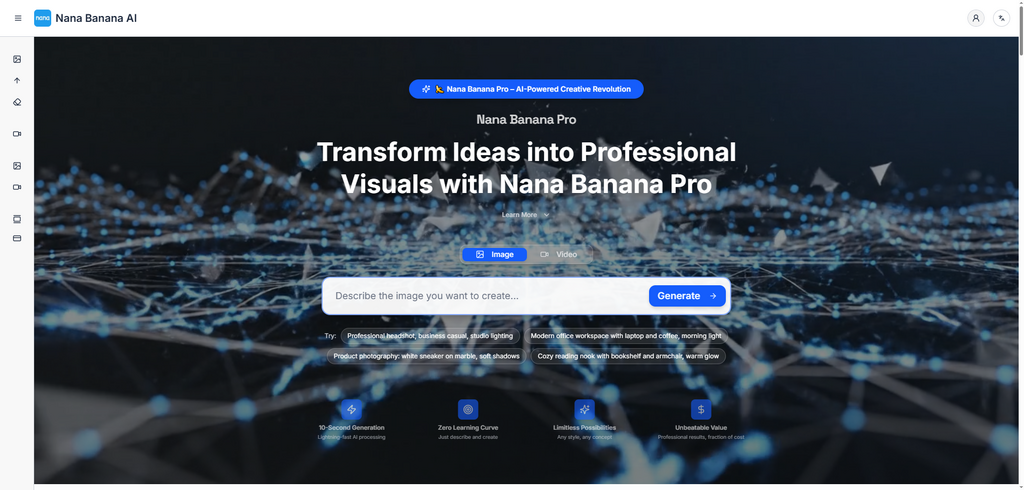
Platforms like Nana Banana have made this accessible specifically for business owners without design backgrounds: the interface is built around plain-English descriptions rather than technical prompts. You describe what you want — “professional headshot, business casual, studio lighting” or “product photography: white sneaker on marble, soft shadows” — and the AI handles the technical execution.
For small business owners who’ve historically avoided AI tools because they assumed a learning curve, the zero-setup reality tends to be a genuine surprise.
Realistic Expectations: What AI Image Tools Won’t Replace (Yet)
Honesty matters here. There are things these tools don’t do well, and businesses that expect them to should calibrate accordingly.
Brand identity and strategy work: AI can execute visual assets, but it can’t develop your brand positioning, define your visual identity, or make strategic decisions about how your business should be perceived. That work still requires human judgment — often a professional designer or strategist.
Complex custom illustration: Highly specific custom characters, detailed infographics, or technically precise diagrams still benefit from human illustrators, particularly when brand consistency across a large asset library is critical.
Authentic personal photography: If your brand’s differentiator is genuine human connection — a local restaurant, a personal service, a community-focused retailer — real photography of real people in real spaces communicates something AI can’t replicate.
Video that requires real environments or people: Ambient footage and atmospheric clips work well with AI generation. Testimonials, walkthroughs, and personality-driven content still need cameras.
The smart approach isn’t “replace everything with AI” — it’s “use AI for the high-volume, repeatable visual tasks, and invest human creativity and budget in the work that genuinely requires it.”
Getting Started: A 30-Day Plan for Small Business Owners
If you’re spending more than $300/month on visual content creation and want to test whether AI generation can reduce that cost, here’s a practical entry point:
Week 1 — Audit your current visual spend
List every visual asset you paid for in the last 30 days. Include freelancer invoices, stock photo subscriptions, agency fees, and design tool subscriptions. Calculate cost per asset. Identify the single most expensive category.
Week 2 — Test with your highest-volume use case
Take the asset type you need most frequently (social media graphics, product images, ad creatives) and generate 20 test assets using an AI tool. Tools like Banana AI let you start generating images immediately from a plain-English description — no account setup friction, no design software required. Compare quality against your current assets honestly.
Week 3 — Calculate your break-even point
How many AI-generated assets do you need to produce to justify a paid subscription? Most businesses hit break-even within the first week of real use.
Week 4 — Decision and transition
Decide which parts of your visual workflow to shift to AI and which to keep with human creators. Notify affected freelancers or agencies with appropriate lead time — most have already adapted their services to focus on higher-value creative work.
The five business owners above didn’t implement a grand strategy. They started with one problem, found that AI tools solved it, and gradually expanded their use from there. That’s all the planning required.
The Honest Bottom Line
Marketing budgets for small businesses are constrained by definition. Every pound or dollar spent on design is a pound or dollar not spent on distribution, customer acquisition, or product development.
AI visual creation tools represent a genuine structural shift in what’s possible for businesses operating without agency budgets or in-house design teams. The 80% cost reduction figure in the headline isn’t aspirational — it’s what Rachel, James, Priya, Marcus, and Sophie each achieved independently, applying the same core shift to different business contexts.
The technology is accessible today. The learning curve is measured in hours, not weeks. And the cost of not experimenting — continuing to pay freelancer rates for repeatable, high-volume visual tasks — compounds every month you wait.
Have you started using AI image generation tools in your small business? The range of use cases continues to expand — from product photography to video content to ad creative testing. The businesses getting ahead are the ones experimenting now, before these tools become table stakes.