
Augmented reality has finally outgrown its clumsy prototype phase. In 2026, we aren’t just seeing tech demos; we are seeing refined, everyday wearables that can serve as portable alternatives to monitors and TVs. The market has exploded with options, from sleek audio frames to immersive spatial computers. For consumers, the challenge has shifted from finding hardware to finding the right ecosystem. And for wired display glasses, compatibility—especially USB-C DisplayPort (DP) Alt Mode—is still the gatekeeper.
To help you navigate this crowded field, we have researched, compared, and ranked the best ar glasses available this year. We judged them on visual fidelity, comfort for long sessions, and how seamlessly they integrate into a modern digital life. We also keep use cases separate, so cinema-first display glasses aren’t judged by the same rules as camera-first AI frames.
The New Standards for 2026
Before you buy, you need to know what separates a gadget from a daily essential. In 2026, a simple heads-up display is no longer enough for cinema-focused XR display glasses. We now demand cinema-grade visuals.
When searching for the best AR glasses, three metrics matter most for portable-monitor style XR display glasses. First is PPD (Pixels Per Degree), which strongly influences sharpness. Second is ergonomic weight distribution; nose fatigue is the enemy of immersion.
Third is compatibility. The top contenders must plug-and-play with the devices you already own, specifically USB-C devices that support DisplayPort (DP) Alt Mode (and not every “flagship” phone line actually outputs video over USB-C). For AI smart glasses, the daily-driver test shifts to comfort, battery life, privacy design, and whether the information overlay is genuinely useful.
The Cinematic Heavyweights
This category is for the media powerhouses. These glasses are designed to replicate the experience of sitting in a premium movie theater, regardless of where you actually are.
RayNeo Air 3s Pro
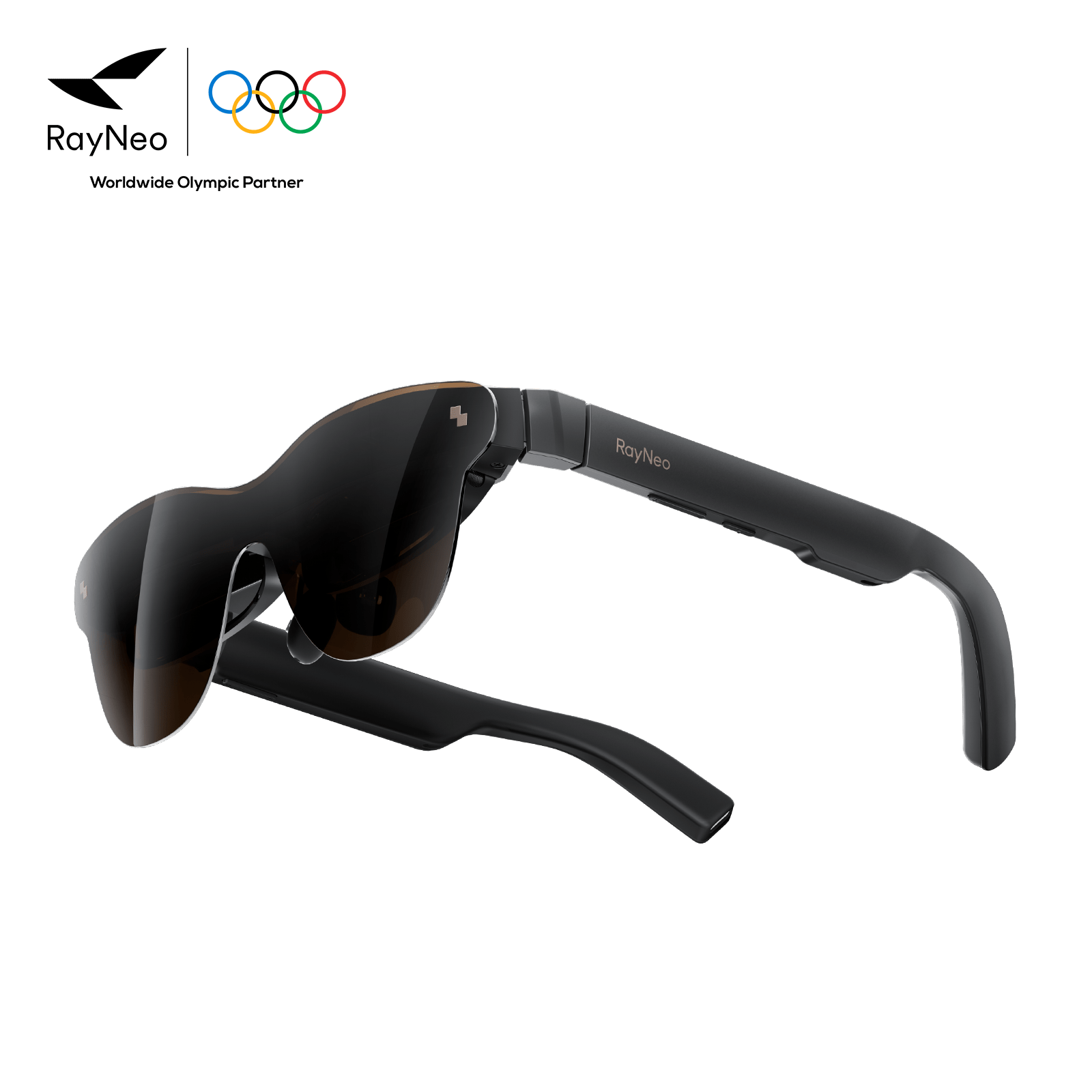
The RayNeo Air 3s Pro AR Glasses secure our top spot by mastering the balance between performance and practicality. Instead of piling on complex “spatial” features, they focus on the two things most first-time buyers notice immediately: standout picture quality and surprisingly strong audio.
At the heart of the RayNeo Air 3s Pro AR Glasses is a refined Micro-OLED engine. It delivers deep, inky blacks and vibrant colors that make standard laptop screens look dull by comparison, with up to 1,200 nits to-eye brightness for punchier highlights. Paired with a 4-speaker acoustic setup, the result is one of the most complete “personal cinema” experiences in this class—both visually and sonically—without needing extra earbuds.
By prioritizing top-tier sensory performance over unnecessary complexity, it stands as the most refined entry point for those new to augmented reality.
XREAL One
XREAL continues to be a major player in the space. The XREAL One builds on its predecessor’s legacy with a built-in spatial computing chip that enables native 3DoF screen modes alongside electrochromic dimming.
You can instantly block out your surroundings with a single button press using its electrochromic dimming modes, and the native “Anchor” style viewing can keep the screen more stable for productivity and light multitasking.
However, the edge-to-edge clarity on the XREAL One can still vary by fit and optics, especially when reading fine text at the corners of the display.
VITURE Pro
VITURE retains its crown for handheld gaming integration. If you practically live on your Steam Deck or Nintendo Switch, the VITURE Pro offers a smooth, gaming-friendly setup.
The myopia adjustments on these glasses (integrated on VITURE Pro) are a lifesaver for prescription lens wearers, eliminating the need for custom inserts.
While excellent for gaming, the color calibration leans heavily towards high contrast. This works for games but can feel slightly oversaturated for professional photo editing or cinema purists looking for the best AR glasses for color accuracy.
Diverse Options for Every User
This section covers a wider range of needs, from high-value daily drivers to premium spatial computers that aim to replace your laptop entirely.
RayNeo Air 3s
If the Pro model is the flagship, the RayNeo Air 3s is the undisputed value champion of 2026. It packs the same stunning Micro-OLED visual punch into an equally travel-friendly chassis.
It strips away some of the niche enthusiast features to focus purely on the essentials: a massive, crisp virtual screen, trading peak brightness for a lower price. It is the perfect entry point for anyone curious about AR.
For users who want the visual fidelity of the RayNeo Air 3s Pro AR Glasses but have a tighter budget, the Air 3s delivers most of the experience for a lower price.
Apple Vision Air
Apple’s highly anticipated “Air” model is rumored but unannounced, and it is more commonly discussed as a lighter, lower-cost headset rather than true glasses. The eye-tracking interface (as demonstrated on Apple’s current Vision lineup) remains the gold standard for intuitive control.
The integration with the Mac ecosystem is flawless on supported Vision devices. You can look at your MacBook and expand your desktop into a massive virtual workspace instantly.
The downside is the price and uncertainty. Until Apple officially announces it, both pricing and availability are speculation, and it should be treated as a “watch this space” item rather than a guaranteed 2026 purchase—especially compared with readily available options like the RayNeo Air 3s Pro AR Glasses.
Rokid Max 2
The Rokid Max 2 is all about maximizing screen size and myopia-friendly comfort, advertising a 215-inch virtual screen and built-in vision adjustment.
This massive screen real estate is perfect for multitasking with multiple windows open. However, the edges can suffer from slight distortion due to the aggressive optics.
Lifestyle and Minimalist Frames
Sometimes you don’t need a 100-inch screen. These picks prioritize style, audio, and subtle assistance over immersive visuals.
Ray-Ban Meta Gen 2
These dominate the “social” category. With a camera-and-audio-first approach and no large virtual screen, they look exactly like standard sunglasses, making them socially acceptable anywhere.
The Gen 2 cameras have continued to improve generation to generation, making them the ultimate tool for capturing POV content for social media. They are the best AR glasses for creators who want to stay in the moment.
Even Realities G2
The Even Realities G2 takes a strictly utilitarian approach. It projects a minimal green, text-first display for notifications, teleprompter scripts, and turn-by-turn navigation, and it avoids an onboard camera to prioritize privacy.
You won’t watch movies on these. But for a public speaker needing notes or a traveler navigating a new city, the “heads-up display” functionality is distraction-free and highly effective.
Specialized Gaming Gear
The final entries in our top 10 list are dedicated to specific niches, particularly the hardcore PC gaming crowd.
- Lenovo Legion Glasses 2: These are purpose-built to tether with the Legion Go and other compatible USB-C DP devices. They eliminate driver headaches and deliver a 1080p-class external display experience for Windows gaming.
- Asus AirVision M1: Asus brings its ROG aesthetic to the table. These allow users to set up multiple virtual screens using the ASUS AirVision software, creating a multi-screen layout that is surprisingly effective for productivity.
What’s Coming Next?
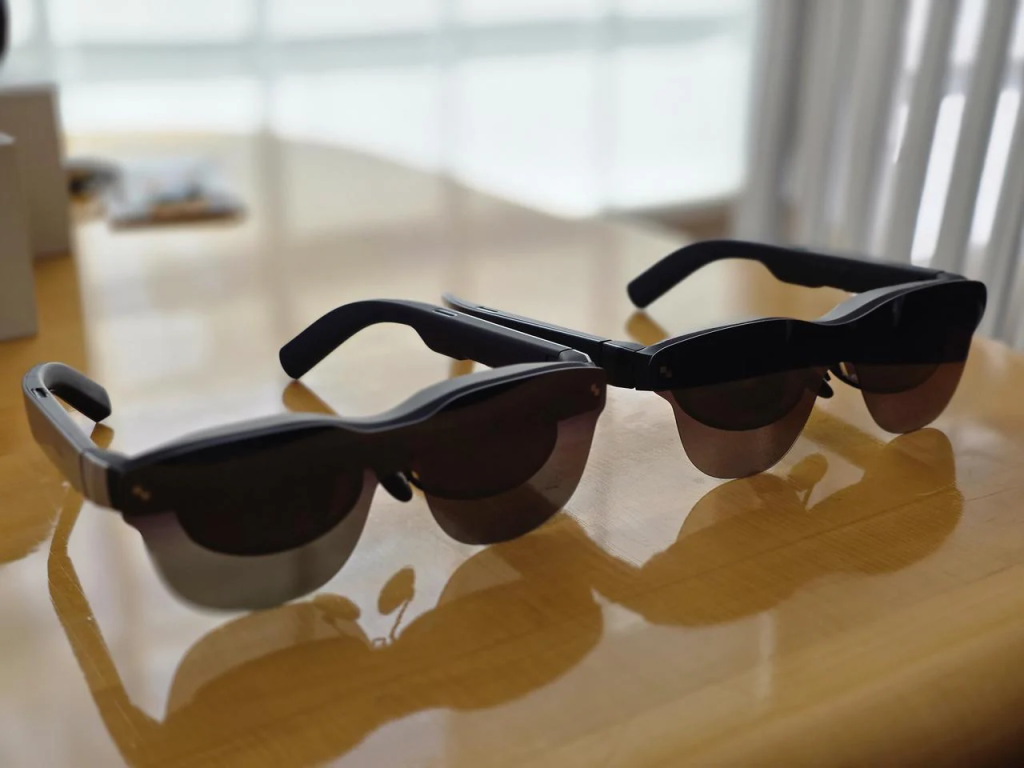
The innovation cycle in this industry is relentless. While the RayNeo Air 3s Pro AR Glasses are the current champion, industry rumors and early-show teases point to an exciting future for next-generation display glasses.
One near-term example is RayNeo’s Air 4 Pro, which CES 2026 hands-ons have highlighted for bringing HDR10 to Micro-OLED display glasses—plus Bang & Olufsen-tuned audio—in a lightweight, travel-ready frame. If its aggressive pricing holds, it could set a new baseline for “personal cinema” wearables.
Reports suggest future RayNeo Air-series models may emphasize HDR-focused tuning and lighter materials, but details should be treated as tentative until officially announced.
Final Verdict
Choosing the right wearable in 2026 depends entirely on your primary use case. The market has segmented into clear categories for every type of user.
- For Cinema & Media: The RayNeo Air 3s Pro AR Glasses offer the best visual fidelity.
- For Best Value: The RayNeo Air 3s delivers premium visuals at an entry-level price.
- For Social: Ray-Ban Meta Gen 2 remains the king of capture.
We are living in the golden age of optical wearables. Whether you choose the immersive capabilities of the best ar glasses or the subtle utility of audio frames, the screenless future is officially here.