

Supply chain leaders navigate disruptions, higher savings demands, and eroding clinical support
HOUSTON, Jan. 20, 2026 /PRNewswire/ — symplr®, a leading provider of enterprise healthcare operations software, today shared the findings from its third annual 2026 State of Healthcare Supply Chain Survey, highlighting how supply chain leaders’ priorities are evolving. After years focused first on cost savings and then on managing pandemic-driven disruptions, leaders now face a combined challenge: ongoing disruptions and rising cost pressures that must be addressed simultaneously.
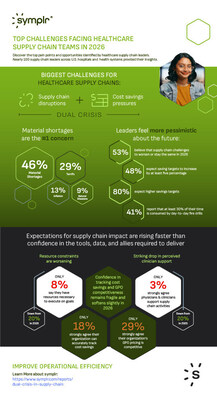
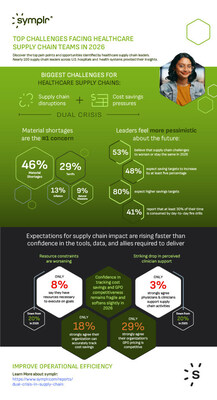
The survey shows that this balancing act is taking a toll on optimism: more than half of respondents (53%) expect supply chain challenges to get worse in 2026, up from 24% the year before. And leaders are looking at disruptions in a new way — what once seemed temporary is now considered a regular part of managing a healthcare supply chain. Volatility has not eased, while financial pressure has increased as health systems work to stabilize margins, making cost savings both more necessary and more difficult to achieve.
The survey also uncovered dwindling clinical alignment, further compounding these challenges. Just 32% of respondents say their supply chain is fully clinically integrated, and perceived clinician support has declined significantly. Just 3% of respondents now “strongly agree” that clinicians are supportive of supply chain initiatives, a disconnect that directly affects organizations’ ability to standardize products, manage utilization, and make evidence-based product decisions. Other key survey findings include:
- Savings targets continue to rise, with most organizations reporting multi-million-dollar savings goals in 2025 and expecting higher targets in 2026, despite material shortages, tariffs, and inflation.
- Organizations are moving away from price-only strategies toward approaches focused on product and process standardization, stronger GPO and vendor partnerships, utilization management, and closer collaboration with clinicians.
- To respond to these pressures, supply chain leaders are prioritizing cost savings, improving patient outcomes, and standardizing processes while monitoring and reducing unnecessary utilization.
“The challenges facing healthcare supply chains haven’t gone away—they’ve added up,” said Dee Donatelli, Vice President of Spend Management at symplr. “During the pandemic, supply chain and clinical teams worked closely out of necessity, and that collaboration made a real difference. As operations normalize, that discipline is slipping. Success in 2026 won’t come from adding more tools or complexity. It will come from returning to the basics: strong clinical partnership, evidence-based decisions, consistent processes, and a focused approach to utilization.”
To read the full 2026 State of Healthcare Supply Chain Survey and access additional insights, visit https://www.symplr.com/reports/dual-crisis-in-supply-chain.
About symplr
symplr is a leader in enterprise healthcare operations software and services with a first-of-its-kind operations platform. Trusted in 9 of 10 U.S. hospitals and 400+ U.S. health plans, symplr optimizes operations and maximizes care powered by our cloud-based workforce, quality, provider data management, and spend solutions. Gain efficiency, reduce complexity, and improve outcomes where it matters most. Learn how to stay ahead of change at www.symplr.com.

 View original content to download multimedia:https://www.prnewswire.com/news-releases/symplr-survey-reveals-healthcare-supply-chain-leaders-face-a-dual-crisis-as-disruptions-persist-and-cost-pressures-intensify-302664652.html
SOURCE symplr

