Kubernetes has become an important foundation for organizations running modern cloud-native applications. Its ability to automate container deployment, scaling, and management has changed how development and operations teams approach infrastructure. But automation also introduces a new operational question: when a production system detects a problem, how much authority should an automated process have to correct it?
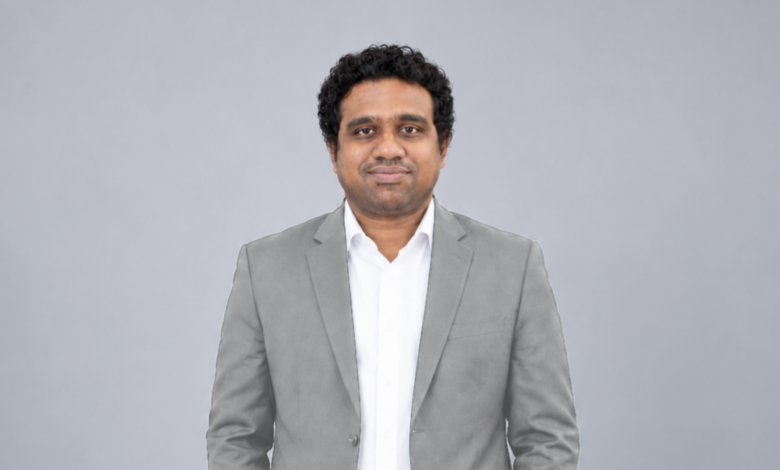
For Saketh Gowerneni, an AWS and DevOps Engineer with experience spanning cloud infrastructure, automation, continuous delivery, Linux administration, and application development, this question sits at the intersection of reliability and responsible automation. His professional experience includes working with AWS, Kubernetes, Docker, Jenkins, Ansible, Python, CloudWatch, Elasticsearch, and other technologies used to build and operate modern application environments.
His work reflects an important principle in cloud operations: automating a remediation does not eliminate the need for engineering judgment.
The Reliability Challenge Behind Automated Infrastructure
Kubernetes can automatically restart workloads, scale applications, and maintain desired states. DevOps platforms can automate builds and deployments. Monitoring systems can generate alerts when resources or applications behave unexpectedly. Together, these capabilities can significantly reduce manual intervention. However, an automated action that is appropriate in one situation can create additional risk in another.
This becomes particularly relevant as organizations begin incorporating artificial intelligence into DevOps and infrastructure operations. AI-assisted systems can analyze large volumes of operational information and recommend potential responses to incidents. Yet a recommendation generated from telemetry should not automatically be treated as authorization to modify production infrastructure.
Saketh Gowerneni’s Approach to Policy-Controlled Remediation
This principle informed Gowerneni’s development of a Kubernetes Remediation Governor, a public technical reference project focused on policy-controlled remediation. Rather than treating automation as unrestricted execution, the concept introduces controls between an identified problem and the execution of a corrective action.
The framework considers factors such as risk classification, permitted remediation actions, blast-radius limitations, health validation, rollback requirements, and escalation conditions. In practical terms, this creates a separation between identifying a problem, recommending a response, determining whether that response is permitted, and executing it.
Such separation becomes increasingly important as infrastructure environments grow more complex.
Connecting Cloud Infrastructure Experience with Observability
Gowerneni’s professional experience provides a practical foundation for this perspective. During his AWS/DevOps work, he implemented and managed infrastructure using services including EC2, S3, RDS, EBS, Elastic Load Balancing, Auto Scaling, VPC, IAM, CloudFormation, Lambda, and CloudWatch. He also worked with Ansible and Python to automate cloud deployments and operational processes.
In one environment, he used Ansible, AWS Lambda, and CloudWatch Logs to create a log aggregation pipeline involving the ELK stack, enabling application and infrastructure logs to be collected and processed centrally. This experience illustrates why observability is an essential component of automated remediation: before an automated system can respond responsibly, it needs reliable information about what is happening inside the environment.
His Kubernetes experience adds another layer to this operational model. Gowerneni implemented Kubernetes for the orchestration, deployment, scaling, and management of Docker containers. Combined with his experience in Jenkins-based continuous delivery, Git, Ansible, AWS infrastructure, and Python automation, this provided exposure to the interconnected systems that modern DevOps teams must manage.
From Incident Detection to Verified Recovery
The relationship between observability and remediation can be viewed as a continuous feedback loop. Monitoring and telemetry provide evidence of a problem. Automated analysis can help identify potential causes and recommend actions. Policy controls determine which actions are permissible. The remediation is then executed within defined boundaries, followed by health checks that determine whether the system has actually recovered.
The final verification step is critical. An automated process should not consider a remediation successful simply because a command completed successfully. The relevant application, workload, or service must demonstrate recovery through measurable health indicators.
Establishing Guardrails for AI-Assisted Cloud Operations
This approach is also relevant to the growing use of generative AI in enterprise operations. AI can potentially accelerate troubleshooting by helping engineers interpret logs, summarize incidents, correlate signals, and identify possible solutions. But production automation still requires controls around permissions, risk, auditability, rollback, and human escalation.
For engineers working with Kubernetes and cloud infrastructure, the objective therefore is not simply to automate as many operational tasks as possible. It is to establish appropriate boundaries around automation so that systems can respond quickly without turning every automated recommendation into an unrestricted production change.
Gowerneni’s technical work illustrates this philosophy through the combination of cloud infrastructure, DevOps automation, observability, Kubernetes, and policy-driven remediation. His experience across AWS environments and continuous-delivery workflows, together with his public work on Kubernetes remediation, reflects the broader evolution of DevOps toward increasingly automated but carefully governed infrastructure operations.
The Future of Kubernetes Reliability
As Kubernetes adoption and AI-assisted operations continue to develop, reliability engineering will increasingly involve a balance between machine-speed response and human-defined controls. The most useful automation may not be the automation that acts without restriction, but the automation that knows what it is allowed to do, when it should stop, and when an engineer needs to make the final decision.
That distinction could become increasingly important as organizations move toward more autonomous cloud operations: not automation without oversight, but automation designed with reliability, observability, and guardrails at its core.